Hair Transplant
Unshaven Hair Transplant
An unshaven hair transplant — also called a no-shave, non-shaven or shaveless hair transplant — moves hair follicles into thinning areas without cutting the hair around them, so you leave the clinic with your usual hairstyle. At our Istanbul clinic it is performed with FUE or DHI, fully unshaven for suitable patients up to Norwood 4, and costs from €6,000 (about £5,200 or $7,000) as an all-inclusive package.
Free consultation+44 20 3337 6262
At a glance
- Procedure length
- 3 to 6 hours fully unshaven; up to 8 hours partially unshaven
- Anaesthesia
- Local
- Stay in Istanbul
- 3 nights
- Back to work
- Often within 2 to 3 days, with hair concealing the area
- Final result
- 12 to 18 months
Unshaven Hair Transplant at a Glance
- Hair restoration since 1994
- Ministry of Health licensed
- [Device name] robotic system
- 12-month result tracking
Unshaven, No-Shave, Non-Shaven, Shaveless: What the Terms Mean
Clinics use several names for the same idea, and the names do not always mean the same thing. What matters is not the label but which areas are cut and which are left at their natural length. There are three options.
| Option | Also called | Donor area | Recipient area | Typical grafts |
|---|---|---|---|---|
| Fully unshaven | Long hair FUE, next-generation unshaven, completely shaveless | Not cut; follicles extracted between long hairs | Not cut | [1,500 to 2,500] |
| Partially unshaven | No-shave, non-shaven, shaveless, hair transplant without shaving | Narrow band trimmed, hidden under longer hair | Not cut | [2,000 to 3,000] |
| Shaved | Standard FUE or DHI | Shaved | Shaved | [4,000 to 5,000] or more |
How an Unshaven Hair Transplant Works
The surgery follows the same stages as a standard FUE or DHI procedure: extraction from the donor area, creation of recipient sites, and implantation. The difference is that every step is performed between hairs left at their full length, which makes each step slower and more exacting.
Partially unshaven
The hair in the recipient area is left untouched. In the donor area, one or more narrow bands are trimmed short at the back of the head, positioned so that the hair above falls over them when combed down. Grafts are extracted from these bands and implanted between the existing hairs at the front, top or crown. Because the donor can be worked efficiently, this option allows more grafts than a fully unshaven procedure.
Fully unshaven
Neither the donor nor the recipient area is cut. The surgeon parts the long hair in the donor area and extracts follicles individually between the strands, trimming only the hair of each follicle being removed. Grafts are then implanted between existing hairs in the recipient area. The procedure takes around three to six hours, is suited to hair loss up to Norwood 4 with a strong donor area, and requires considerable precision to avoid damaging the surrounding follicles. Because the transplanted hairs keep their length, you can see the planned shape on the same day. That appearance is temporary: most transplanted hairs shed between weeks two and eight before regrowing from month three.
Unshaven FUE or Unshaven DHI?
Both techniques can be performed unshaven. Which one suits you depends on the area being treated and how much native hair is left in it.
| Comparison point | Unshaven FUE | Unshaven DHI |
|---|---|---|
| How grafts are placed | Incisions opened between hairs, grafts placed with forceps | Choi implanter places each graft between hairs in one motion |
| Best suited to | Mid-scalp and crown, partially unshaven procedures | Hairline, temples, parting and small areas with dense native hair |
| Risk to existing hairs | Low with careful incision placement | Lowest, fewer separate wounds |
| Speed | Faster | Slower |
| Typical grafts | Up to [2,500 to 3,000] | Up to [2,000 to 2,500] |
| Often combined? | Yes: DHI at the hairline, FUE behind it |
Unshaven vs Shaved Hair Transplant: The Trade-Offs
An unshaven transplant is more discreet, but discretion has a cost. The table sets out what you gain and what you give up compared with a fully shaved procedure.
The short version: unshaven is the better choice when discretion matters and your hair loss is limited. Shaved is the better choice when you need a high graft count, when the area to be treated is largely bald, or when the priority is the maximum result from one session.
| Factor | Unshaven | Shaved |
|---|---|---|
| Visibility after surgery | Largely concealed from day 2 to 3 | Visible until hair regrows, around 3 to 4 weeks |
| Return to work | Often 2 to 3 days | Usually 7 to 10 days for client-facing roles |
| Grafts in one session | [1,500 to 3,000] | [4,000 to 5,000] or more |
| Procedure time per graft | Longer | Shorter |
| Suitable hair loss | Up to Norwood 4, thinning rather than bald areas | All stages |
| See the planned shape on the day | Yes, temporarily | No |
| Surgeon's view of the scalp | Partially obscured by hair | Unobstructed |
| Price at our clinic | from €6,000 | from €3,000 |
Who Is Suitable for a No-Shave Hair Transplant?
Suitability depends on three things: how much native hair remains in the area to be treated, how strong the donor area is, and how long the existing hair is. At our clinic, suitability for a fully unshaven procedure is assessed by Dr Burak Tuncer.
Afro-textured hair can be treated unshaven after the curved structure of the follicles below the scalp has been assessed, because curved follicles are harder to extract between long strands without transection.
- The area to be treated is largely bald, leaving nothing to conceal the grafts
- You need more than around [2,500 to 3,000] grafts in one session
- Your hair is shorter than around [4 to 5] cm, too short to cover a donor band
- Your donor density is low, making extraction between long hairs impractical
- You have hair loss beyond Norwood 4
| Your situation | Fully unshaven | Partially unshaven | Shaved recommended |
|---|---|---|---|
| Receding temples, Norwood 2 to 3 | Usually suitable | Suitable | Not necessary |
| Thinning crown with native hair | Usually suitable | Suitable | Not necessary |
| Norwood 4, strong donor | Possible after assessment | Suitable | Sometimes |
| Norwood 5 or above | Not suitable | Rarely | Yes |
| Female thinning at parting or hairline | Usually suitable | Suitable | Rarely |
| Hair shorter than [4 to 5] cm | Not suitable | Not suitable | Yes |
| Afro-textured hair | Possible after assessment | Possible after assessment | Case by case |
| Repair of an earlier transplant | Case by case | Suitable | Case by case |
Unshaven Hair Transplant for Women
For most women, unshaven is the default rather than an option. Female hair loss usually appears as thinning along the parting, at the temples or across the top of the scalp, with plenty of native hair remaining — exactly the situation an unshaven procedure suits. Long hair also conceals the donor area more easily than the shorter styles most men wear. A dermatological assessment comes first. Diffuse thinning can have causes that a transplant will not fix, including thyroid disease, iron deficiency and hormonal changes after pregnancy or menopause. If the donor area is also thinning, a transplant may not be advisable at all, and we will say so. Where it is suitable, most women need [1,000 to 2,500] grafts, placed with DHI or FUE between existing hairs.
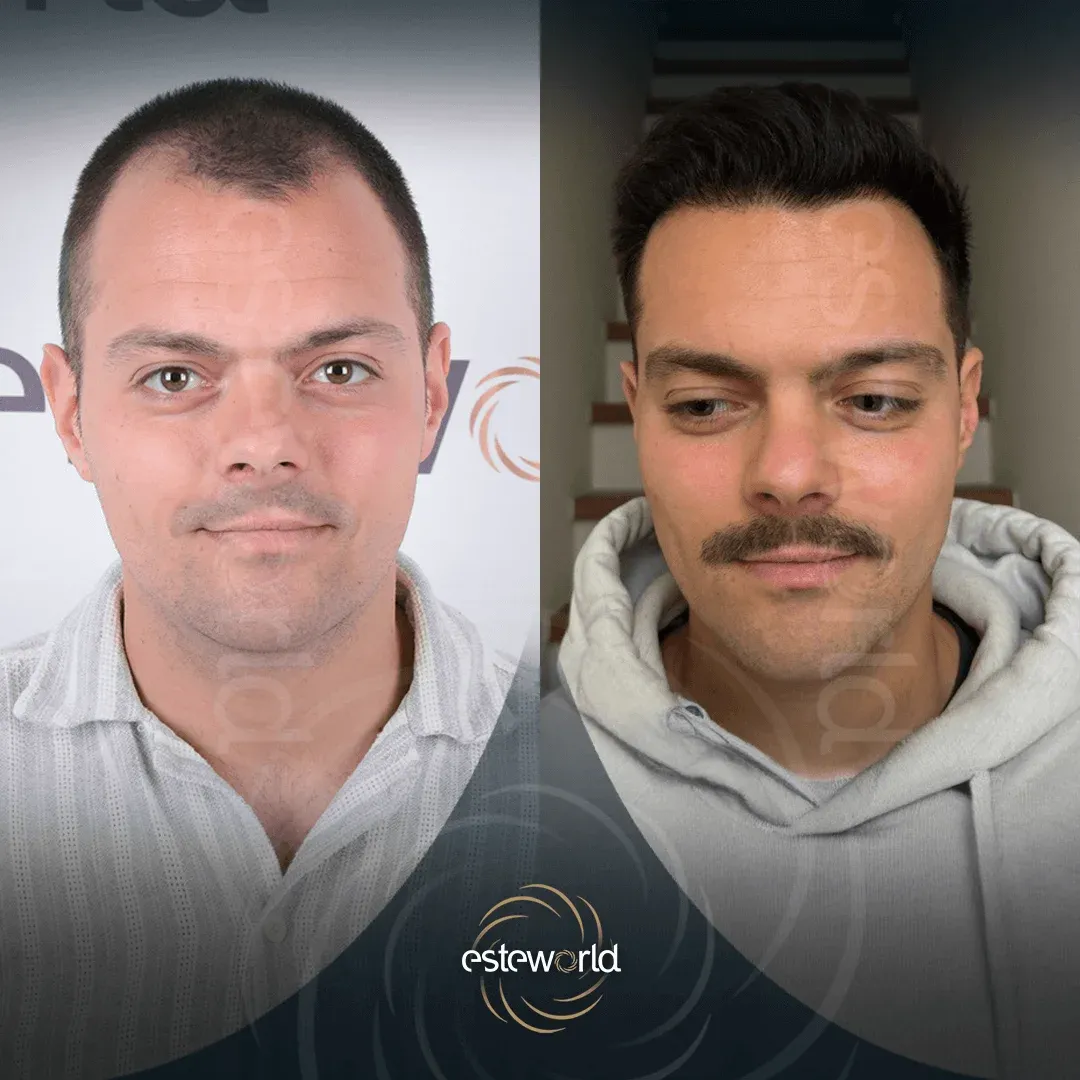
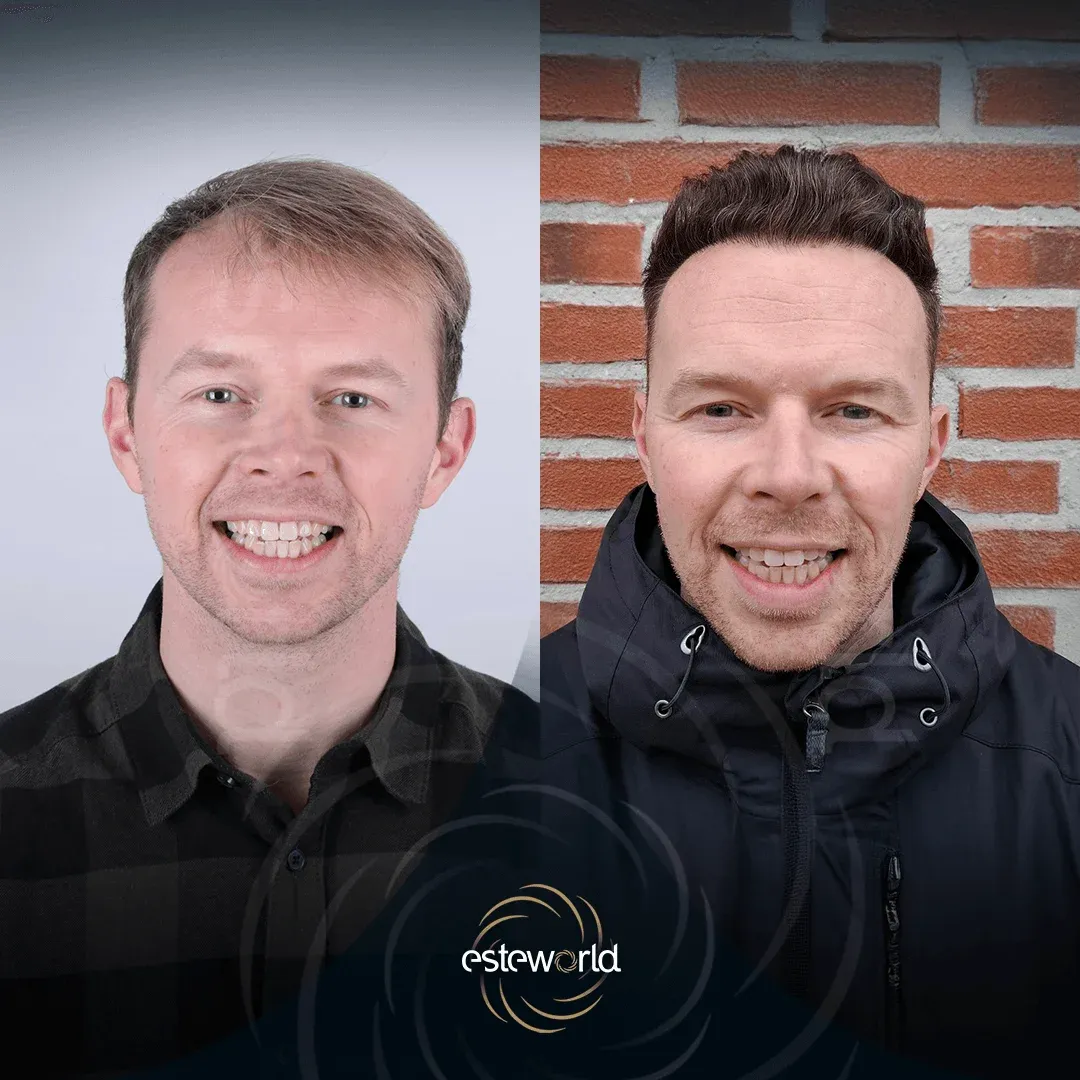
Before & after
Published results
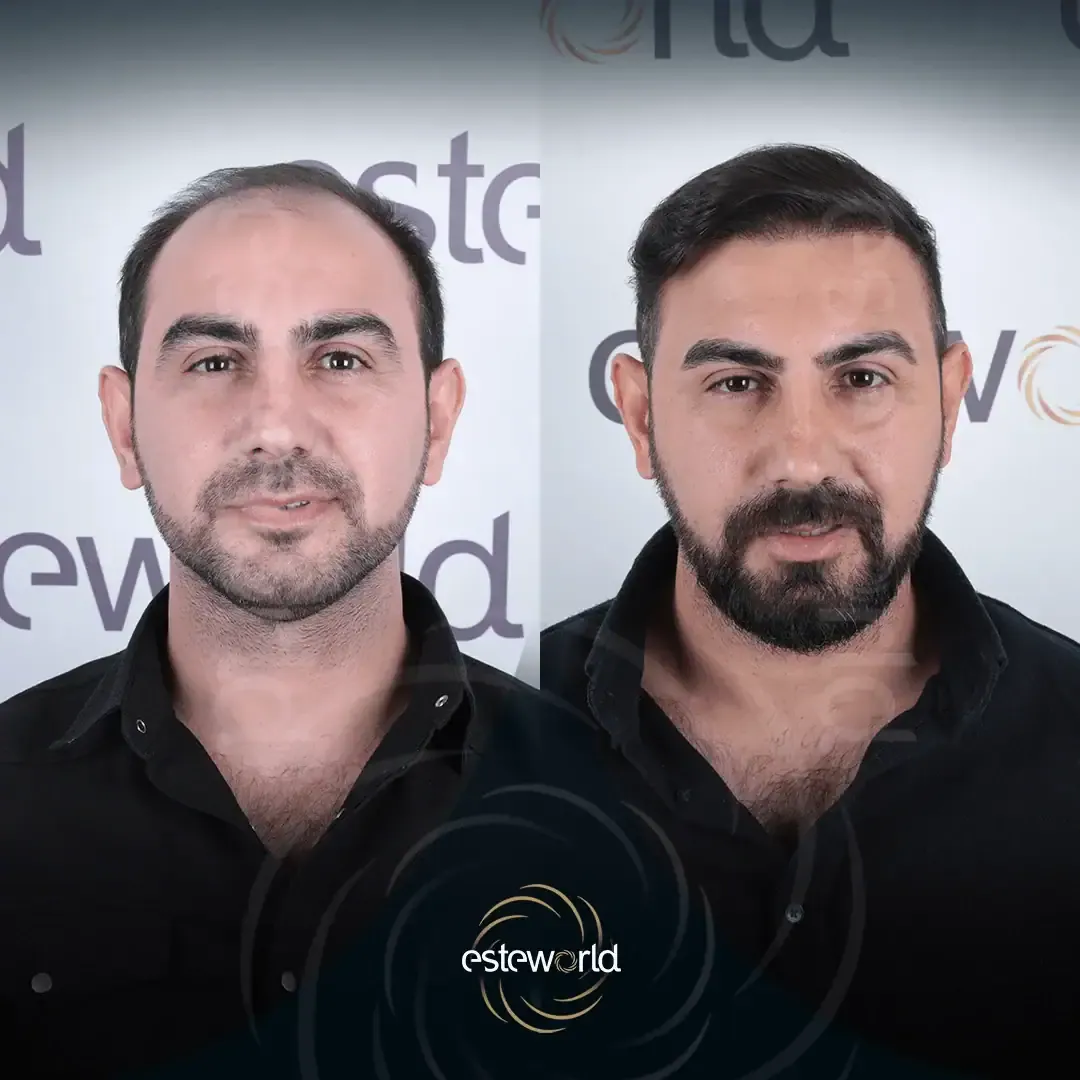
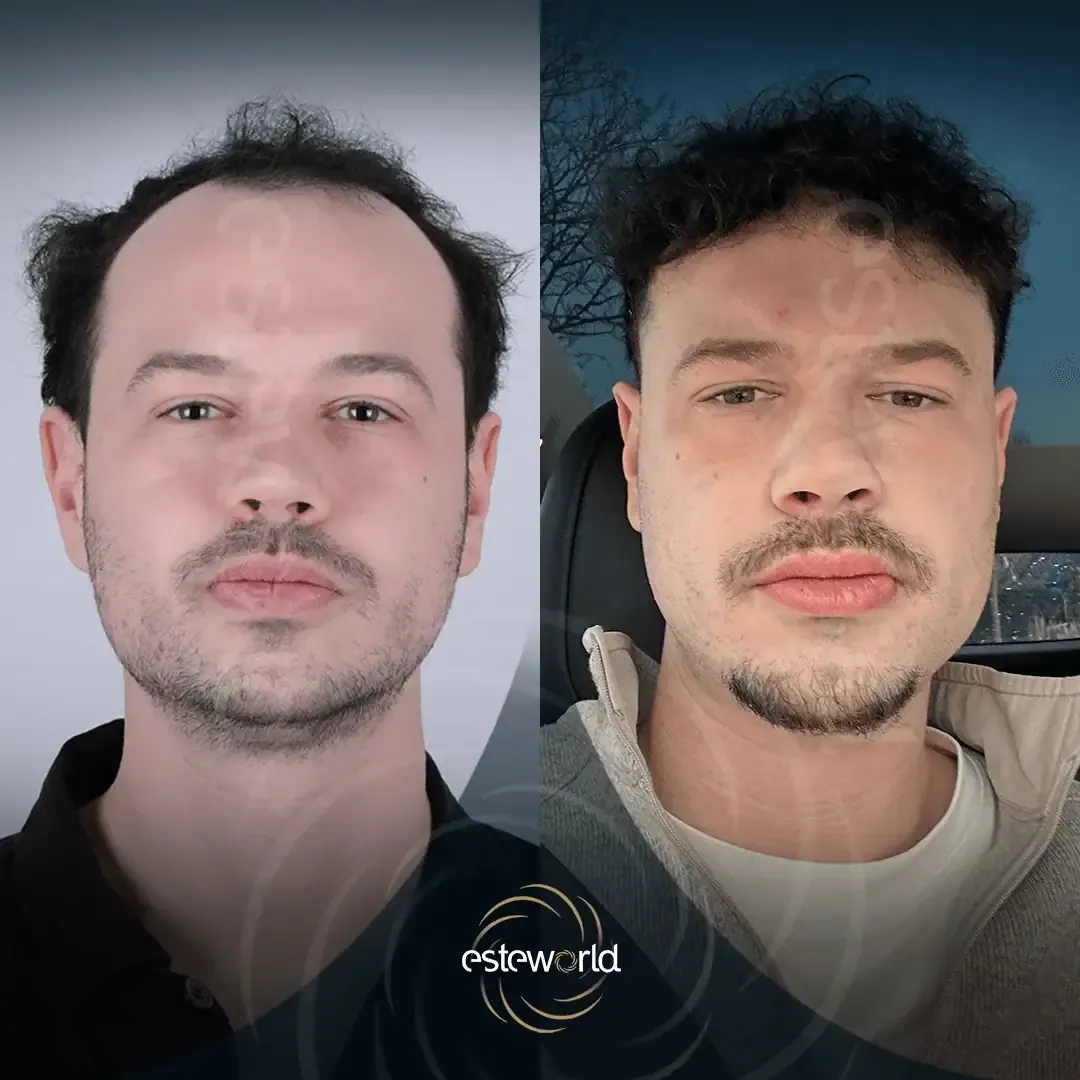
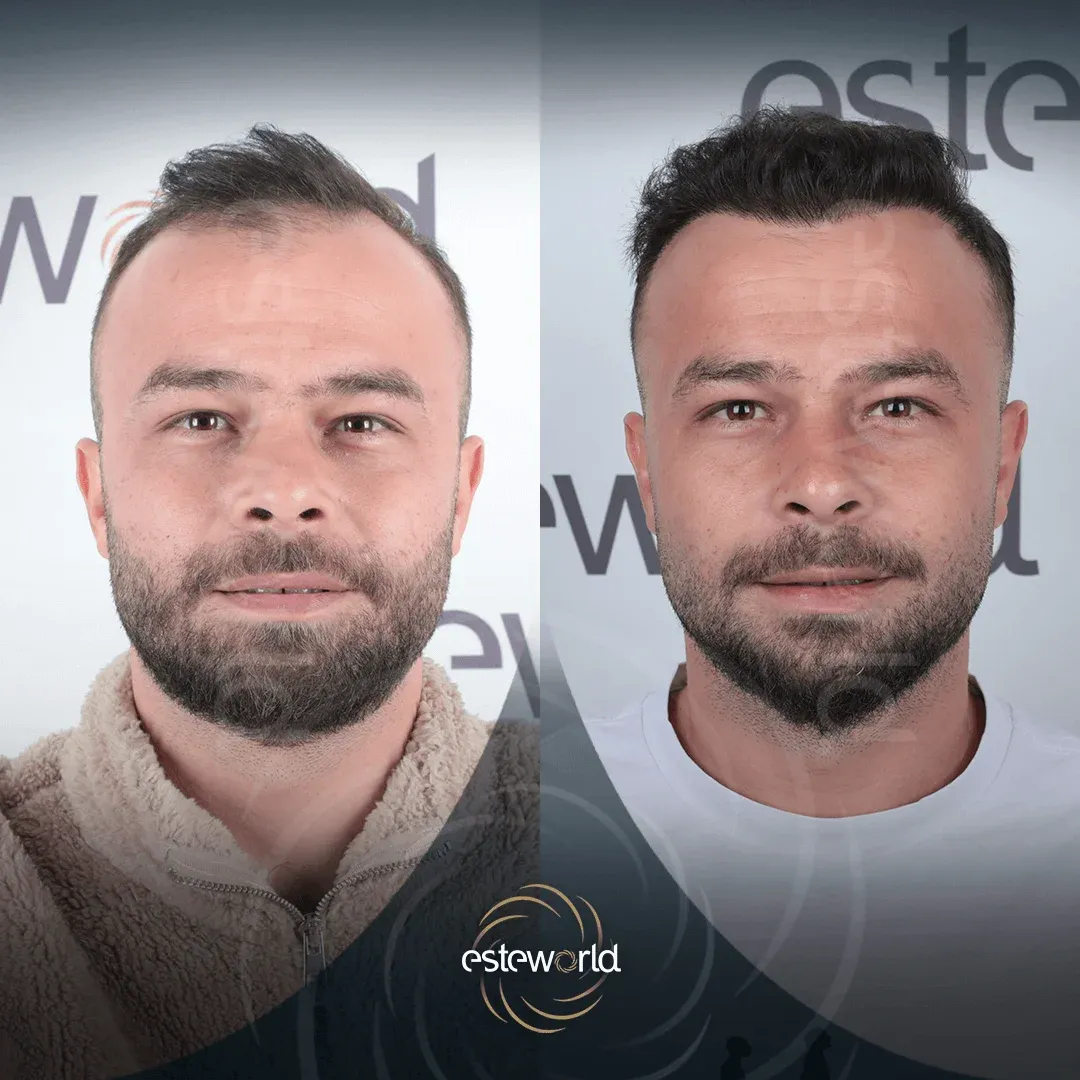
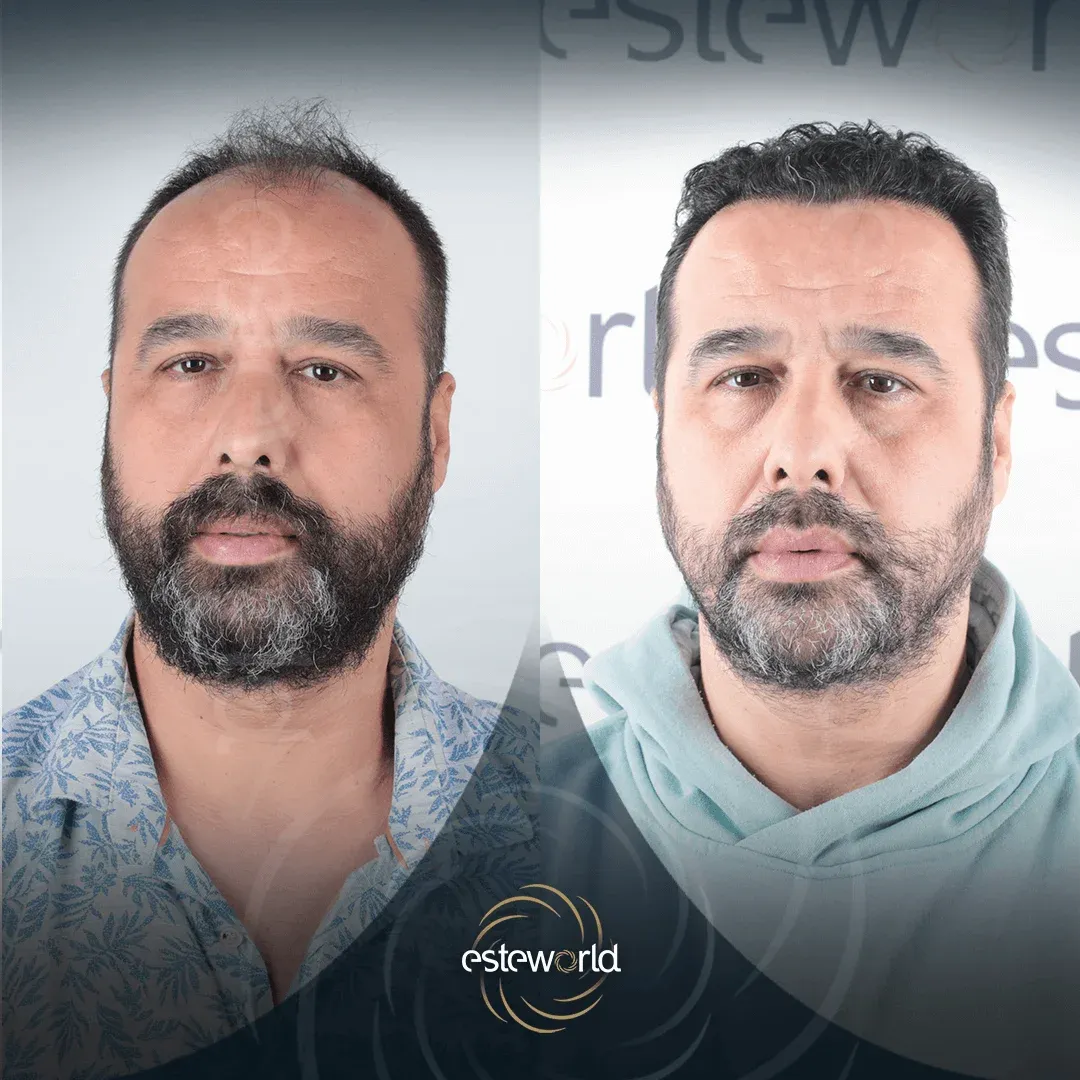
Questions
What is an unshaven hair transplant?
A hair transplant performed without cutting the hair in the area being treated, and in fully unshaven cases without cutting the donor area either. Follicles are extracted and implanted between existing hairs, so you leave the clinic with your normal hairstyle.
Is a no-shave hair transplant the same as an unshaven one?
Yes. Unshaven, no-shave, non-shaven, shaveless and hair transplant without shaving all describe the same approach. What differs between clinics is whether the donor area is also left uncut. Always ask whether a procedure is fully or partially unshaven.
Can a hair transplant really be done without shaving at all?
Yes, for suitable patients. In a fully unshaven procedure neither the donor nor the recipient area is cut. It is suited to hair loss up to Norwood 4 with a strong donor area and usually takes three to six hours.
How many grafts can be transplanted without shaving?
Typically [1,500 to 2,500] in one session, and up to around [3,000] in a partially unshaven procedure. Larger procedures usually require shaving, because extraction between long hairs is slower and the donor cannot be worked as efficiently.
Is unshaven FUE or unshaven DHI better?
It depends on the area. DHI suits the hairline and small areas with plenty of native hair, because the implanter slips between existing hairs. FUE suits slightly larger areas and partially unshaven procedures. Many cases combine both.
Will people notice I have had a hair transplant?
Usually not, if you have enough native hair and it is at least [4 to 5] cm long. The donor band is covered by the hair above it and small scabs in the recipient area are largely hidden. Most patients return to work within two to three days.
Is an unshaven hair transplant more expensive?
Yes. It takes longer per graft and fully unshaven extraction requires specific surgical experience. At our clinic an unshaven package costs from €6,000, compared with from €3,000 for a shaved Sapphire FUE procedure.
Are the results as good as a shaved transplant?
For the areas it is suited to, yes. Graft survival is comparable when the procedure is performed by an experienced team. The limitation is scope: an unshaven procedure covers a smaller area in one session than a shaved one.
In the same family
Medical content from esteworldturkey.com. Every plan starts with a doctor’s assessment. Source page ↗