Hair Transplant
Afro Hair Transplant
An Afro hair transplant is an FUE or DHI procedure adapted for tightly curled and coily hair, whose follicles curve beneath the skin rather than growing straight down. That curve makes extraction slower and more technical, but it also means each graft covers more of the scalp, so fewer grafts are usually needed for the same visual density. At our Istanbul clinic, Afro hair transplants cost from €3,500 (about £3,100 or $4,100) as an all-inclusive package.
Free consultation+44 20 3337 6262
At a glance
- Procedure length
- 6 to 9 hours
- Anaesthesia
- Local, with sedation available
- Stay in Istanbul
- [2/3] nights
- Back to work
- 5 to 10 days
- Final result
- 12 to 18 months
Afro Hair Transplant at a Glance
- Hair restoration since 1994
- Ministry of Health licensed
- [Device name] robotic system
- 12-month result tracking
Why Afro Hair Needs a Different Approach
The same surgical steps apply to every hair type. What changes with Afro-textured hair is what lies beneath the skin, and that affects three things: how grafts are extracted, how far each graft goes, and how the skin heals.
The follicle curves below the skin
In straight hair the follicle runs in a straight line from the surface to the bulb. In tightly curled and coily hair it curves, sometimes into a C or S shape. A standard straight punch following the angle of the hair at the surface can cut through the curved follicle further down — called transection — and a transected graft will not grow. Extraction has to follow the curve, which is slower and needs a surgeon who has done it many times.
Each graft covers more ground
Because curled hair stands away from the scalp rather than lying flat, a single graft of Afro-textured hair covers a larger area than a graft of straight hair. For the same visual density, most patients need fewer grafts. This partly offsets the lower number of grafts that can be extracted per hour.
The skin heals differently
Darker skin is more prone to keloid and hypertrophic scarring, to changes in pigmentation around extraction sites, and to ingrown hairs as curled hair regrows through healing skin. None of these rules out a transplant, but each has to be screened for and planned around before surgery.
Afro Hair Types and What They Mean for Surgery
Afro-textured hair is usually classified by curl pattern, from loose curls (type 3) to tight coils (type 4C). The tighter the curl, the more the follicle curves below the skin and the more carefully extraction must be planned.
| Curl type | What it looks like | Follicle below the skin | Extraction difficulty | Coverage per graft |
|---|---|---|---|---|
| 3C | Tight corkscrew curls | Gently curved | Moderate | Higher than straight hair |
| 4A | Defined S-shaped coils | Curved | Moderate to high | High |
| 4B | Z-shaped coils with sharp angles | Strongly curved | High | High |
| 4C | Very tight coils, little visible curl definition | Strongly curved, often C-shaped | Highest | Highest |
FUE or DHI for Afro Hair?
Both techniques work well on Afro-textured hair. The choice depends on the area being treated and the size of the procedure, and many patients receive both.
Extraction is the same in both — it is the stage where Afro-textured hair makes the biggest difference. Whichever technique is used for implantation, ask how the clinic adapts extraction for curved follicles and what its transection rate is.
| Comparison point | Sapphire FUE | DHI |
|---|---|---|
| Extraction | Adapted punch following the curved follicle | Adapted punch following the curved follicle |
| Implantation | Sapphire blade incisions, grafts placed with forceps | Choi implanter, needle matched to the curved graft |
| Best suited to | Larger areas, mid-scalp | Hairline, temples, crown, unshaven procedures |
| Control over curl direction | Good | Highest, set per graft |
| Handling of fragile curved grafts | Grafts wait briefly before placement | Grafts loaded and placed with minimal handling |
| Often combined? | Yes: DHI at the hairline and crown, Sapphire FUE for the mid-scalp |
How We Adapt the Procedure for Afro-Textured Hair
- Donor analysis. Curl type, follicle curvature, hair calibre and donor density are assessed from your photographs and again in person.
- Scar history check. Any history of keloids, raised scars or scars that have darkened is reviewed before the procedure is confirmed.
- Test extraction. At the start of surgery a small number of grafts are extracted and examined under magnification. If transection is higher than expected, punch size, depth or angle are adjusted before continuing.
- Adapted punches. Extraction uses punches selected for curved follicles, typically slightly wider than for straight hair, set to a controlled depth.
- Graft handling. Curved grafts are more fragile once extracted. They are sorted and kept hydrated in a holding solution until implantation.
- Implantation along the curl. Grafts are placed so that the curl emerges in the same direction as the surrounding native hair, at a low angle at the hairline and following the natural pattern elsewhere.
Medical Screening: Keloids, Traction Alopecia and CCCA
Three conditions are more common in patients with Afro-textured hair and change whether, and how, a transplant should be done. We screen for all three before confirming any procedure.
Traction alopecia is caused by tension from tight braids, cornrows, weaves, locs or extensions. In its early stages it can recover if the tension stops. Once follicles have been lost permanently, a transplant can restore the hairline — but only if the styling that caused the loss changes, because transplanted hair is just as vulnerable to traction as native hair. CCCA (central centrifugal cicatricial alopecia) is a scarring hair loss that starts at the crown and spreads outwards, most common in women of African descent. Transplanting into active CCCA usually fails. The condition must be diagnosed, treated and stable, typically for at least [12] months, before a transplant is considered.
| Condition | What it is | Does it rule out a transplant? | What happens instead |
|---|---|---|---|
| Keloid scarring | Raised scar tissue that grows beyond the original wound | Not always | History reviewed; a small test area may be treated and observed for [3 to 6] months first |
| Traction alopecia, early | Thinning from tension; follicles still alive | Yes, for now | Stop tension styling; hair may recover without surgery |
| Traction alopecia, established | Follicles permanently lost at the hairline or temples | No | Transplant is often very effective if tension styling stops |
| CCCA, active | Scarring hair loss spreading from the crown | Yes | Dermatological treatment first |
| CCCA, stable | No progression for at least [12] months | Case by case | Test area sometimes advised; graft survival in scar tissue is lower |
| Pseudofolliculitis, ingrown hairs | Inflamed bumps as curled hair regrows into the skin | No | Managed with aftercare and, if needed, treatment |
Afro Hair Transplant for Women
Hair loss in Black women usually has a different cause from hair loss in men, and the cause decides whether a transplant will work. The most common are traction alopecia from long-term tight styling, CCCA at the crown, and female pattern hair loss along the parting. Chemical relaxers and heat damage can also contribute. A dermatological assessment always comes first. Where the loss is from traction at the hairline or temples and the follicles are gone, a transplant is often very effective. Where the loss is at the crown, CCCA must be ruled out. Most women need [1,000 to 2,500] grafts, and procedures are usually performed without shaving the recipient area, which long or styled hair conceals well. See our [unshaven hair transplant] guide. After a transplant, avoid tight braids, weaves, extensions and chemical relaxers for at least [6] months, and ideally avoid high-tension styles permanently on the treated area.
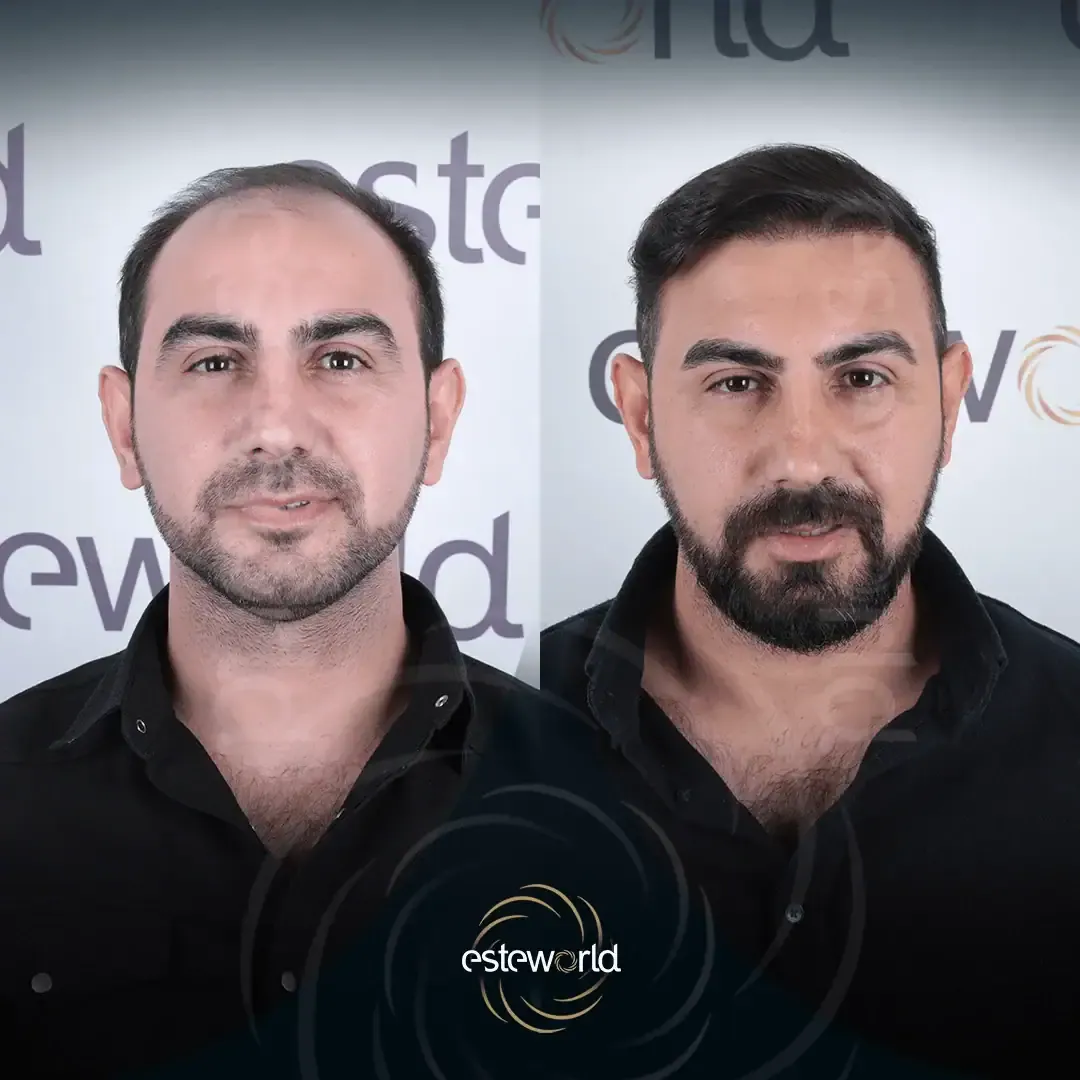
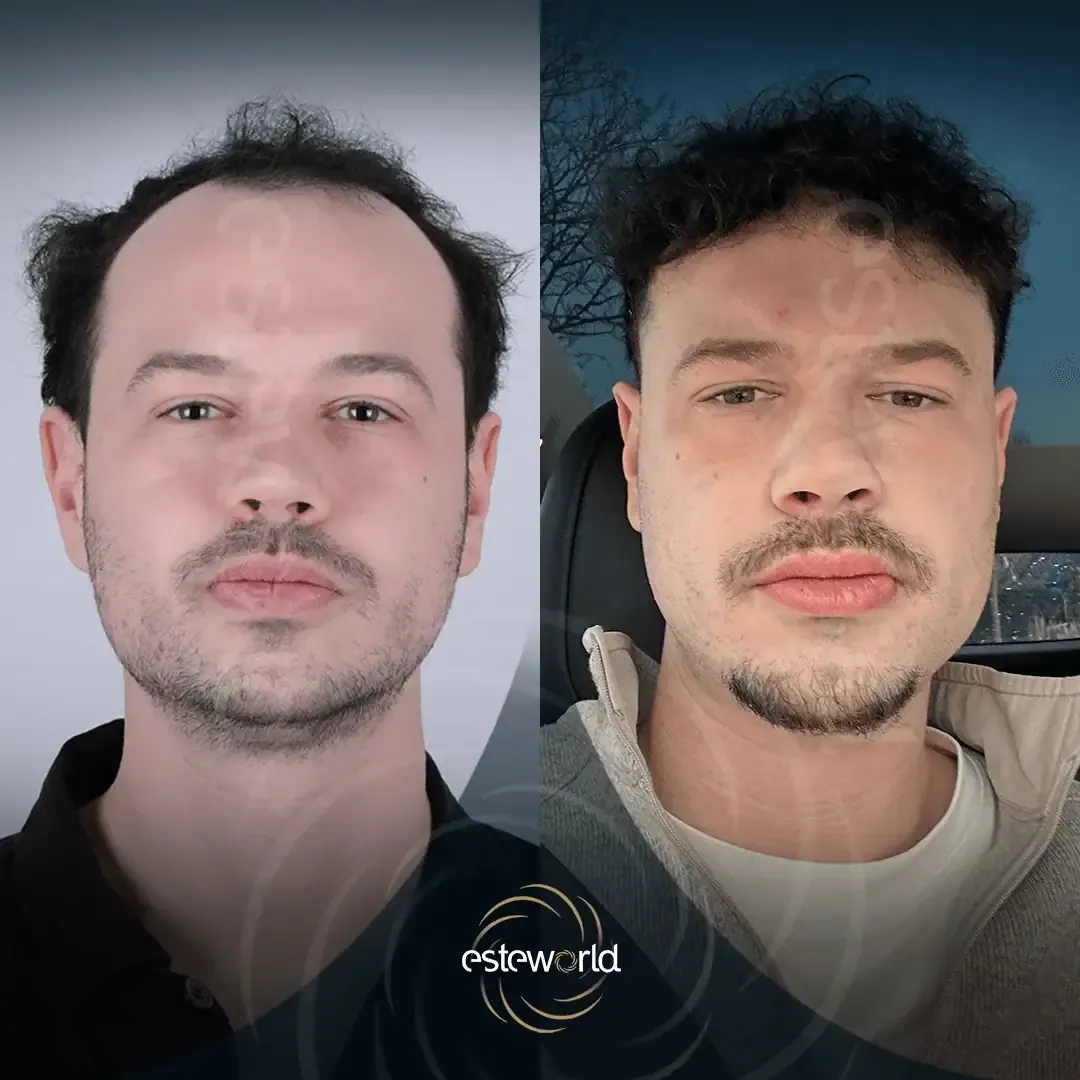
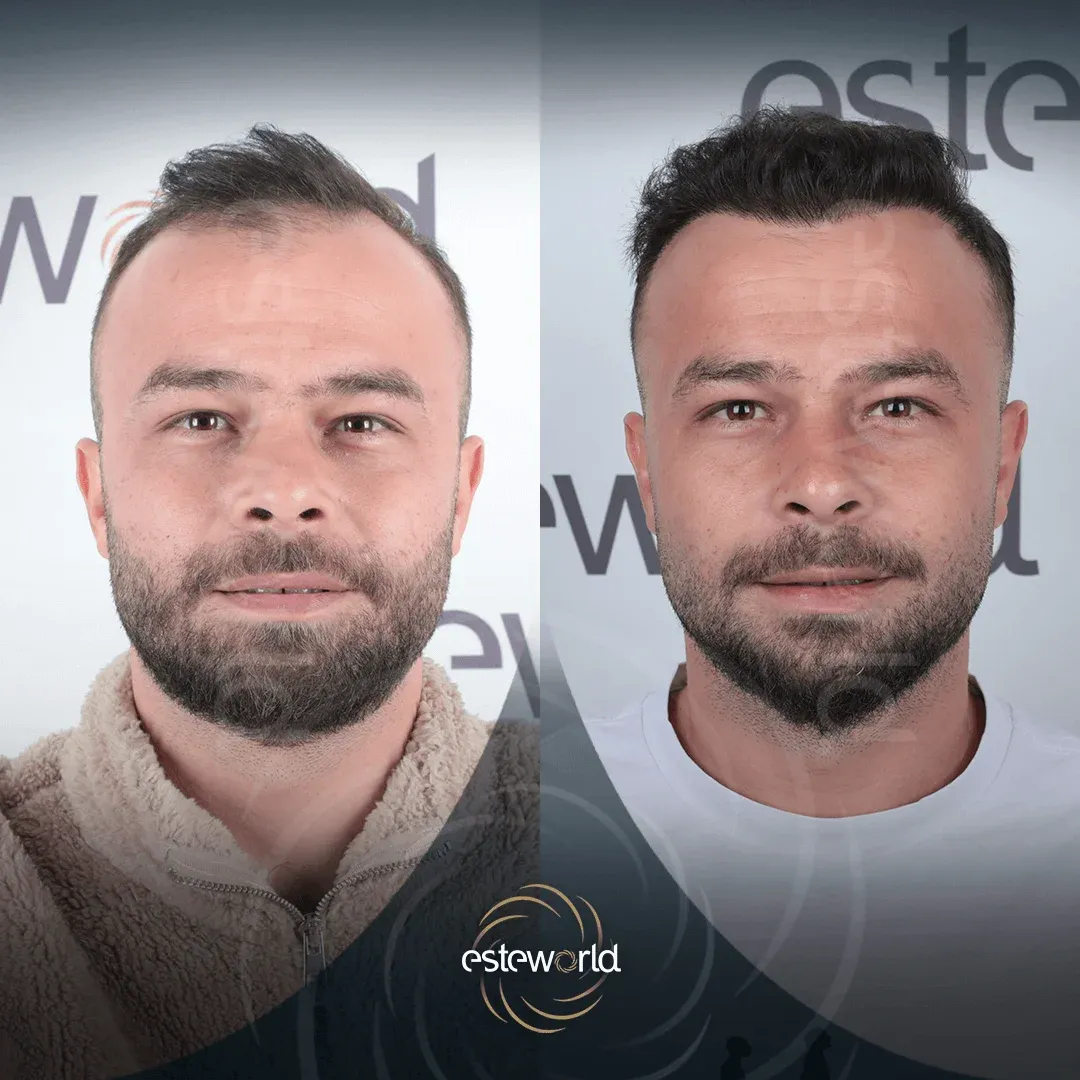
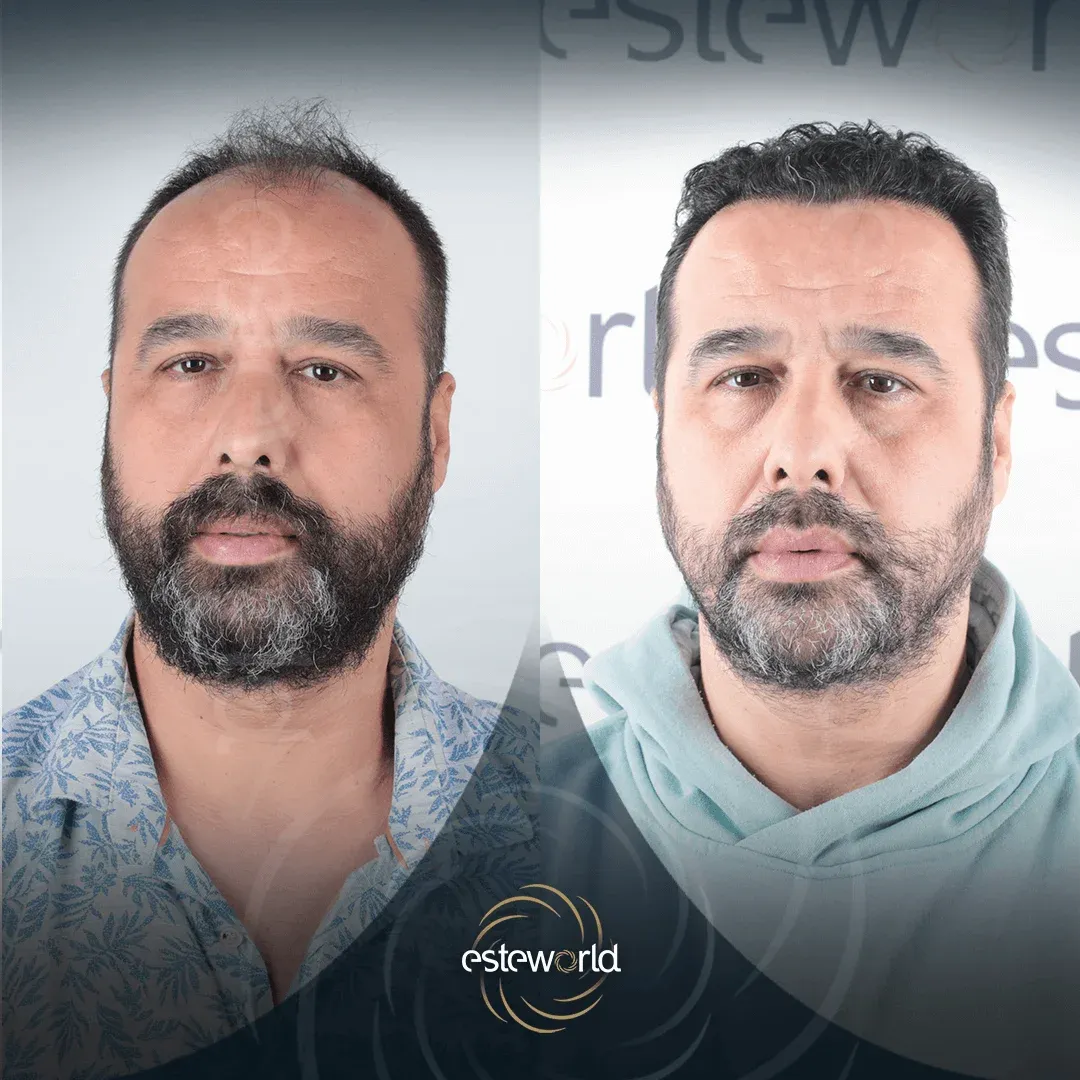
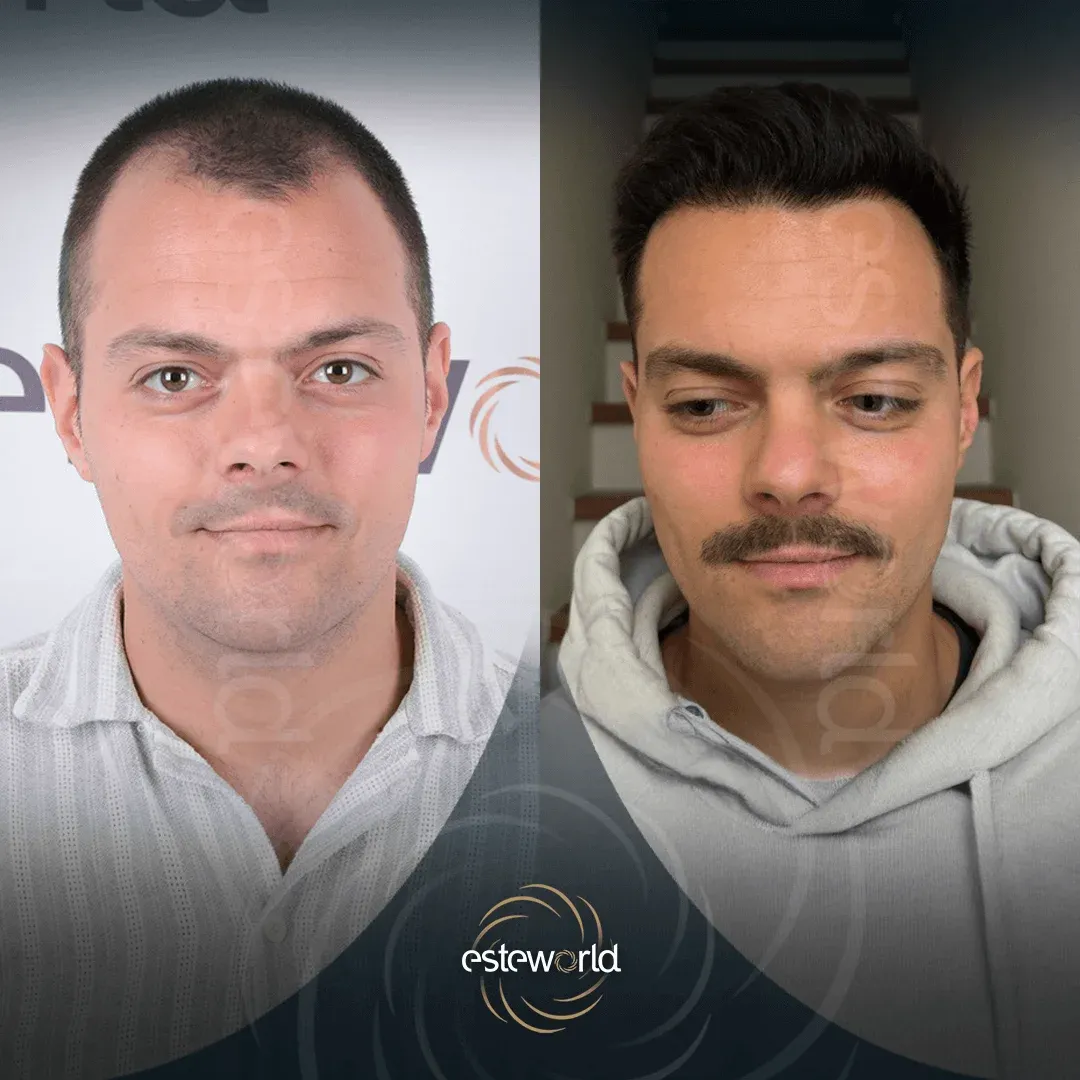
Before & after
Published results

Questions
Can Afro hair be transplanted?
Yes. Afro-textured hair can be transplanted with FUE or DHI, adapted for follicles that curve below the skin. Extraction is slower and more technical than with straight hair, so the surgeon’s experience with curved follicles matters more than the choice of technique.
What makes Afro hair transplants more difficult?
The follicle curves beneath the skin, so a straight punch can cut through it during extraction. Surgeons compensate with a test extraction, adapted punches and a controlled depth. Darker skin also needs screening for keloid scarring and pigmentation changes.
Is FUE or DHI better for Afro hair?
Both work. DHI gives precise control at the hairline and crown and suits unshaven procedures. Sapphire FUE covers larger areas faster. Many patients receive both. What matters most is how extraction is adapted, which is the same for both techniques.
How many grafts will I need?
Usually fewer than for straight hair, because curled hair covers more scalp per graft. A hairline restoration often needs [1,500 to 2,000] Afro-textured grafts, and hairline plus crown [2,500 to 3,500]. Your figure depends on curl type and donor density.
How much does an Afro hair transplant cost in Turkey?
At our Istanbul clinic, from €3,500 (about £3,100 or $4,100) as an all-inclusive package with DHI or Sapphire FUE, covering the procedure, hotel, transfers, interpreter, medication and 1 year of follow-up. The price is fixed before you travel and does not change with the number of grafts.
Can I have a hair transplant if I get keloids?
Sometimes. A history of keloids does not automatically rule out FUE, because the extraction wounds are very small, but the risk must be assessed. Where there is a keloid history, a small test area may be treated first and observed for [3 to 6] months before a full procedure.
Can a hair transplant fix traction alopecia?
Yes, once the follicles have been permanently lost and the styling that caused it has stopped. Transplanted hair is as vulnerable to traction as native hair, so tight braids, weaves and extensions must be avoided on the treated area afterwards.
Can a hair transplant treat CCCA?
Only when the condition is diagnosed, treated and stable, typically for at least [12] months. Transplanting into active CCCA usually fails because the scarring process destroys the new follicles as well.
In the same family
Medical content from esteworldturkey.com. Every plan starts with a doctor’s assessment. Source page ↗