Hair Transplant
DHI Hair Transplant
DHI (Direct Hair Implantation) is a hair transplant technique in which each graft is loaded into a Choi implanter pen and placed into the scalp in a single motion, so the incision and the implantation happen at the same time. It gives the surgeon close control over the angle and depth of every hair, which is why DHI is used for hairlines, the crown and unshaven procedures. At our Istanbul clinic, DHI costs from €3,300 (about £2,900 or $3,900) as an all-inclusive package.
Free consultation+44 20 3337 6262
At a glance
- Sessions
- 1, or 2 consecutive days above 3,500 grafts
- Procedure length
- 7 to 9 hours
- Anaesthesia
- Local
- Shaving
- Full, partial or none, depending on the area
- Stay in Istanbul
- 3 nights
- Back to desk work
- 3 to 5 days
- Visible redness settles
- 7 to 14 days
- Final result
- 12 to 18 months
What Is DHI and How Does It Work?
DHI is a variation of FUE. The grafts are extracted in exactly the same way; what changes is how they go back in. In standard FUE the surgeon first opens all the recipient incisions with a blade and the team places the grafts into them afterwards. In DHI there is no separate incision stage: the hollow needle of the Choi implanter creates the opening and deposits the graft in the same movement. The practical consequence is control. Because the surgeon sets the angle, direction and depth of each hair at the moment it is placed, DHI is particularly suited to areas where small errors are visible — the front edge of the hairline, the temples and the whorl at the crown.
Extraction
The donor area at the back and sides of the scalp is numbed with local anaesthetic. Individual follicular units are removed with a motorised punch of 0.6 to 1.0 mm. The Choi pen is not used for extraction — a common misconception.
Loading the implanter
Each graft is loaded by hand into a Choi implanter. Implanters come in needle diameters matched to the graft: finer needles for single-hair grafts at the hairline, wider ones for three- and four-hair grafts behind it. Several implanters are loaded in rotation so the surgeon places grafts continuously and each graft spends as little time outside the body as possible.
Implantation
The surgeon inserts the needle at the planned angle and depth, presses the plunger to release the graft, and withdraws. Because every opening is made by the needle carrying the graft, the recipient area has fewer and smaller wounds, and native hairs between the grafts are less likely to be damaged — the reason DHI can be done without shaving.
DHI vs FUE vs Sapphire FUE: What Actually Differs
The three techniques share the same extraction. The table compares only what differs: how the recipient site is made and what that means for density, speed, shaving and price.
Is DHI better than FUE? Neither is better overall. DHI gives more control per graft but is slower, so it suits smaller or more detailed areas. Sapphire FUE covers large areas faster and is usually the better choice above [4,000] grafts. Many of our patients receive both in the same session: Sapphire FUE for volume through the mid-scalp and DHI for the hairline and crown.
| Comparison point | DHI | Sapphire FUE | Classic FUE |
|---|---|---|---|
| Graft extraction | Punch, 0.6 to 1.0 mm | Punch, 0.6 to 1.0 mm | Punch, 0.6 to 1.0 mm |
| Recipient incision | Made by the implanter needle during placement | Opened beforehand with sapphire blades | Opened beforehand with steel blades |
| Graft placement | Choi implanter pen | Forceps | Forceps |
| Control of angle and depth | Set per graft at the moment of placement | Set by the incision, then followed during placement | Set by the incision, then followed during placement |
| Grafts in a single day | [3,000 to 3,500] | [4,000 to 5,000] | [4,000 to 5,000] |
| Unshaven option | Yes, up to around [2,500] grafts | Limited | Limited |
| Best suited to | Hairline, temples, crown, unshaven, repairs | Large areas, high graft counts | General coverage |
| Consumable cost | Highest, implanters are single-use | Moderate | Lowest |
When DHI Is the Better Choice
The choice of technique should follow the area being treated and how you want to look in the weeks after surgery, not the name of the method.
| Your situation | Usually recommended | Why |
|---|---|---|
| Receding hairline or temples only | DHI | Precise angle and depth where errors are most visible |
| Widow's peak or hairline redesign | DHI | Control over single-hair grafts at the leading edge |
| Thinning crown | DHI | Grafts must follow the whorl direction |
| Want to keep your hair length | Unshaven DHI | Implanter slips between existing hairs |
| Front, mid-scalp and crown, over [4,000] grafts | Sapphire FUE and DHI combined | FUE for speed across the mid-scalp, DHI for hairline and crown |
| Large bald area, Norwood 5 to 6 | Sapphire FUE, with DHI at the hairline | High graft count in one session |
| Curly or Afro-textured hair | DHI, or combined | Depth control for a curved follicle |
| Repair of an earlier transplant | DHI | Grafts placed between existing, poorly angled ones |
Can DHI Be Done Without Shaving?
Yes. Unshaven DHI is the main reason many patients choose the technique. Because the implanter needle slips between existing hairs without the need for a separate incision stage, the recipient area can be left at its normal length. The donor area is usually shaved in a narrow band that longer hair above it covers when combed down. Unshaven DHI has limits worth knowing before you plan around it. It is slower, so it is best suited to procedures of up to around [2,500] grafts — typically a hairline, temples or a thinning crown. It needs existing hair long enough to conceal the donor band, generally at least [4 to 5] cm. And it is not suitable where there is little or no native hair left in the recipient area, because there is nothing to conceal the grafts during healing.
Who Is a Good Candidate for DHI?
DHI suits most patients who are suitable for FUE. It is the stronger choice where precision matters more than coverage, and a weaker choice where a large area needs to be covered in one day.
- Need a new hairline, temple points or a widow’s peak recreated
- Have thinning, rather than bald, areas and want to keep your existing hair length
- Need crown work, where grafts must follow a whorl pattern
- Have curly or Afro-textured hair, where the curved follicle benefits from controlled depth
- Are a woman with localised thinning at the parting or hairline
- Are having a repair of an earlier transplant with poorly angled grafts
DHI Hair Transplant Cost in Turkey
A DHI hair transplant at our Istanbul clinic costs from €3,300 (about £2,900 or $3,900) as an all-inclusive package. The price is fixed before you travel and covers the maximum number of grafts your donor area can safely provide, so it does not change with graft count.
Why DHI costs more than Sapphire FUE. Two reasons. Choi implanters are single-use, so each DHI procedure carries a consumable cost that Sapphire FUE does not. And DHI is slower, so the same number of grafts occupies more of the surgeon’s time. The difference between our DHI and Sapphire FUE packages is €300 (€3,300 against €3,000). What moves the price elsewhere. Most clinics in Turkey price DHI per graft or with a graft ceiling in the package. When comparing quotes, check whether the price is fixed before you travel, whether a surgeon or a technician performs the implantation, and what happens if your assessment shows you need more grafts than the package covers. All treatment is priced and invoiced in euro. Sterling and dollar figures are indicative conversions and vary with the exchange rate.
| What you get | Details |
|---|---|
| Package price | From €3,300 (approx. £2,900 / $3,900) |
| Grafts included | The maximum your donor area can safely provide |
| Technique | DHI with Choi implanters, combined with Sapphire FUE where indicated |
| Shaving | Shaved or unshaven, decided at assessment |
| Pre-operative tests | Blood tests and scalp analysis included |
| Accommodation | 3 nights in a [4/5]-star Istanbul hotel |
| Transfers | Airport, hotel and clinic, private vehicle |
| Aftercare | Medication, aftercare kit, first wash at the clinic, [X] PRP sessions |
All-Inclusive DHI in Istanbul for UK and US Patients
Istanbul is about four hours from London and ten to thirteen from the US East and West Coasts. The package is built around a three-night stay: you arrive the day before surgery, have the operation on day one, return for the first wash on day two, and fly home on day three or four. For UK patients, a comparable DHI procedure at home is usually priced per graft, and accommodation, aftercare products and follow-up appointments are billed separately. For US patients, the gap is wider still. The procedure itself is the same surgery; what differs is what the price includes and how many cases the surgical team performs each year. Follow-up after you return home is done by photograph at months 1, 3, 6 and 12, reviewed by the team that performed your operation. Continued medication such as finasteride or minoxidil should be discussed with your own GP or physician.
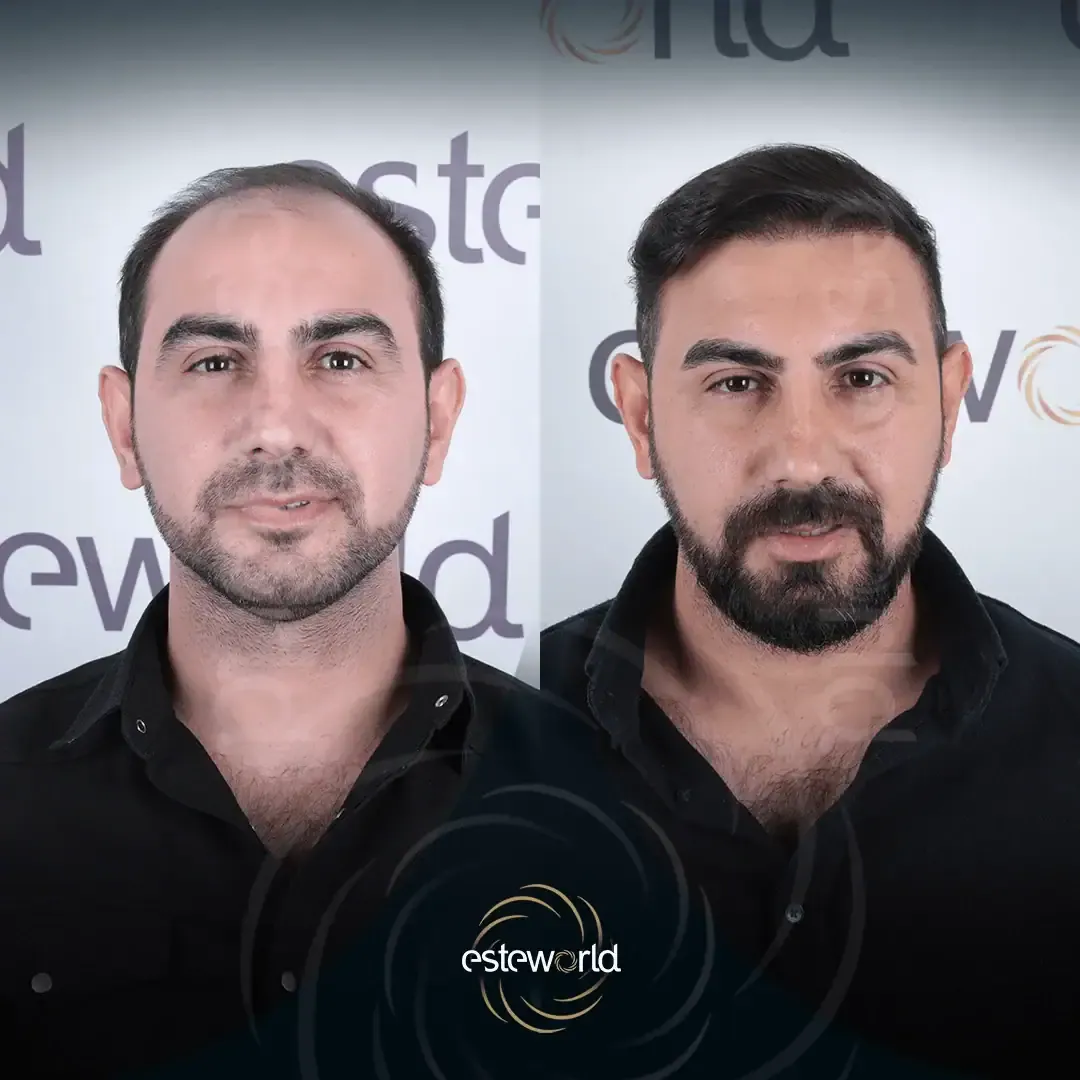
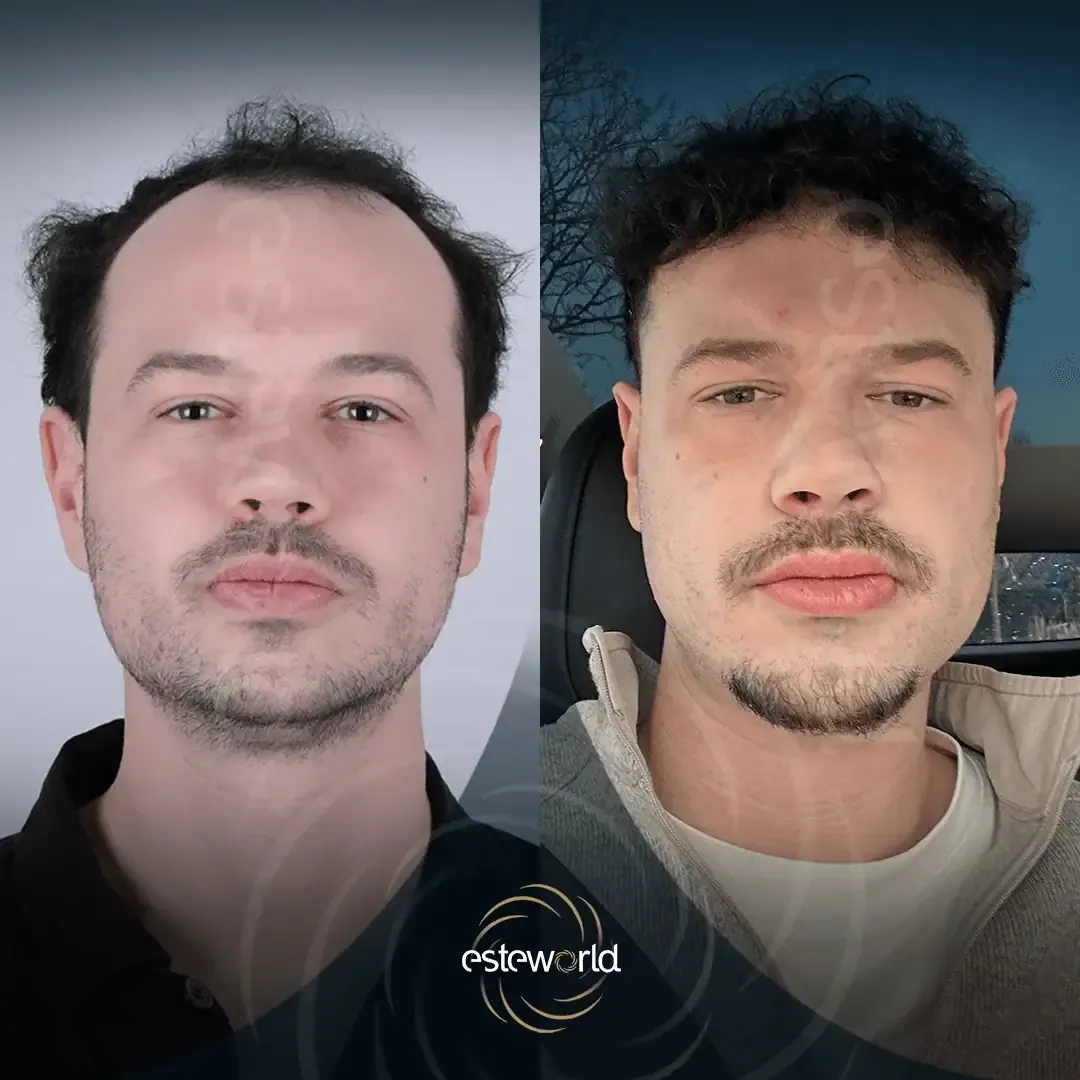
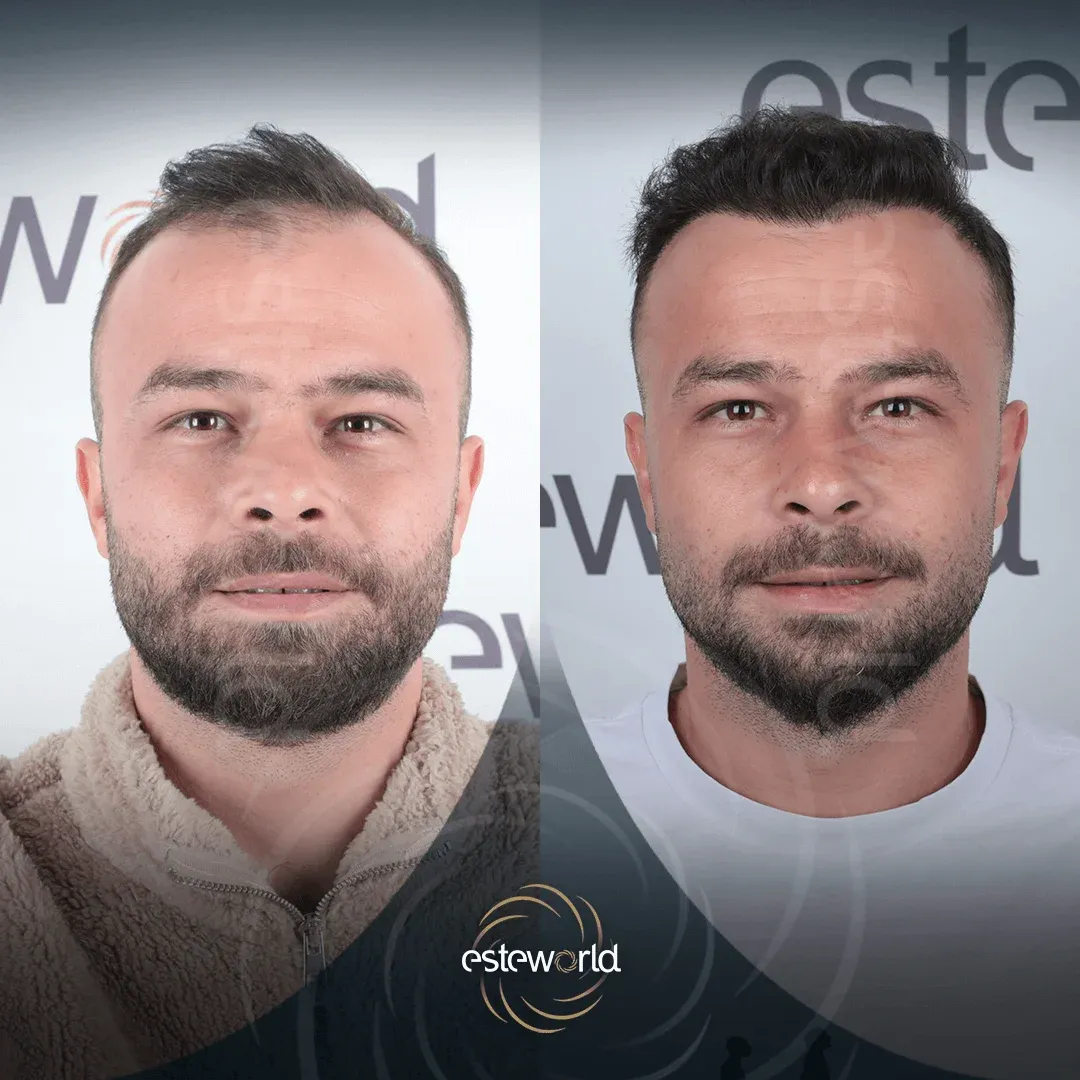
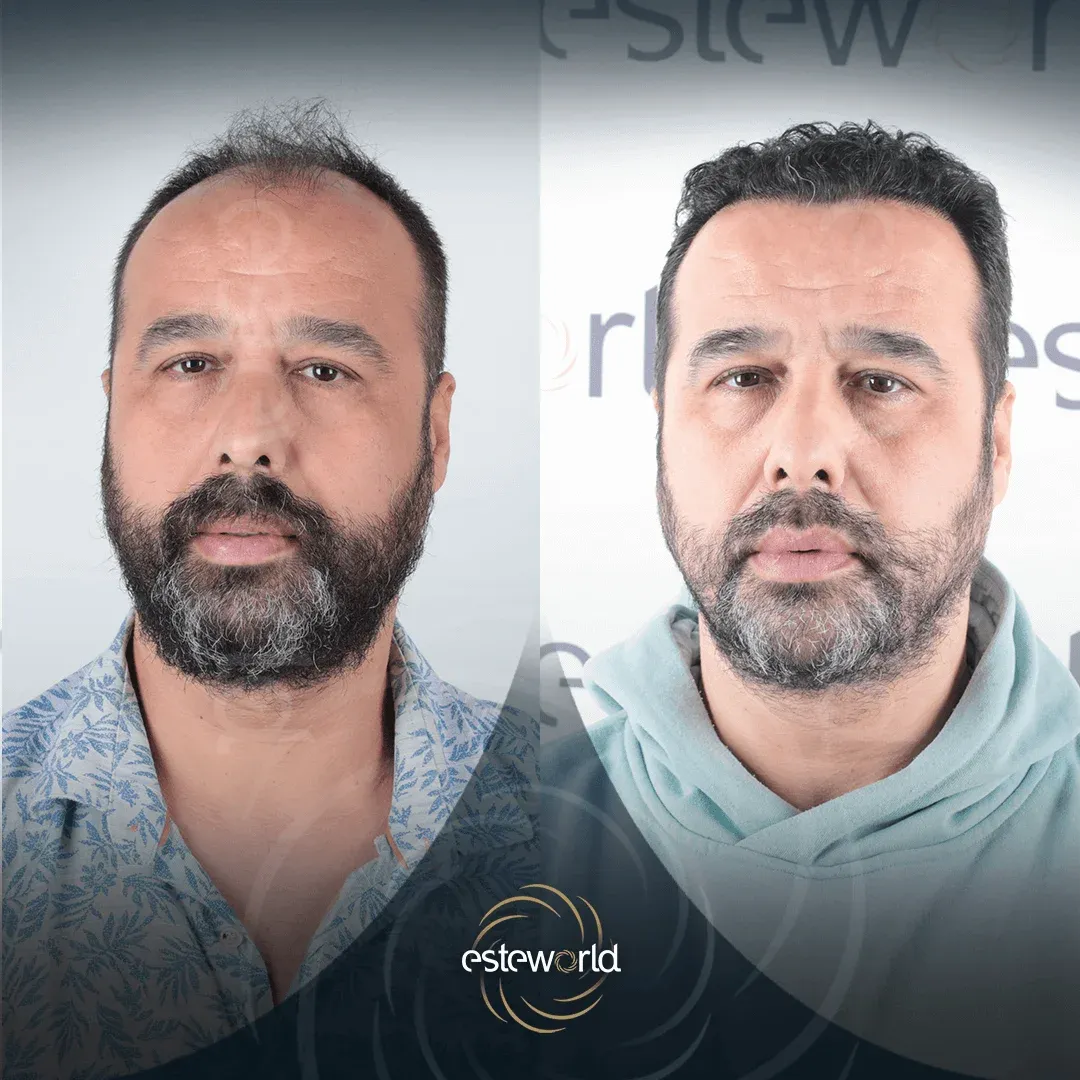
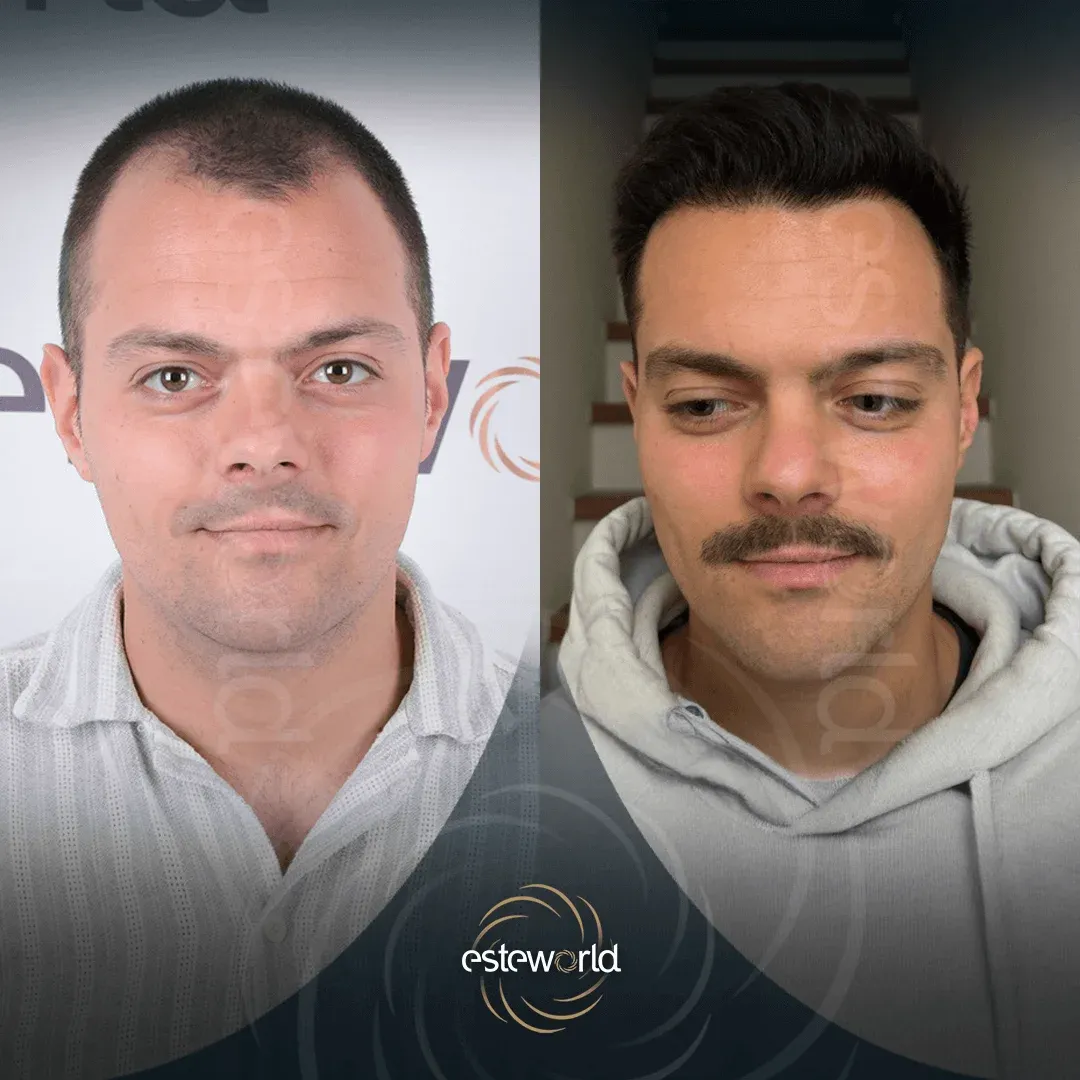
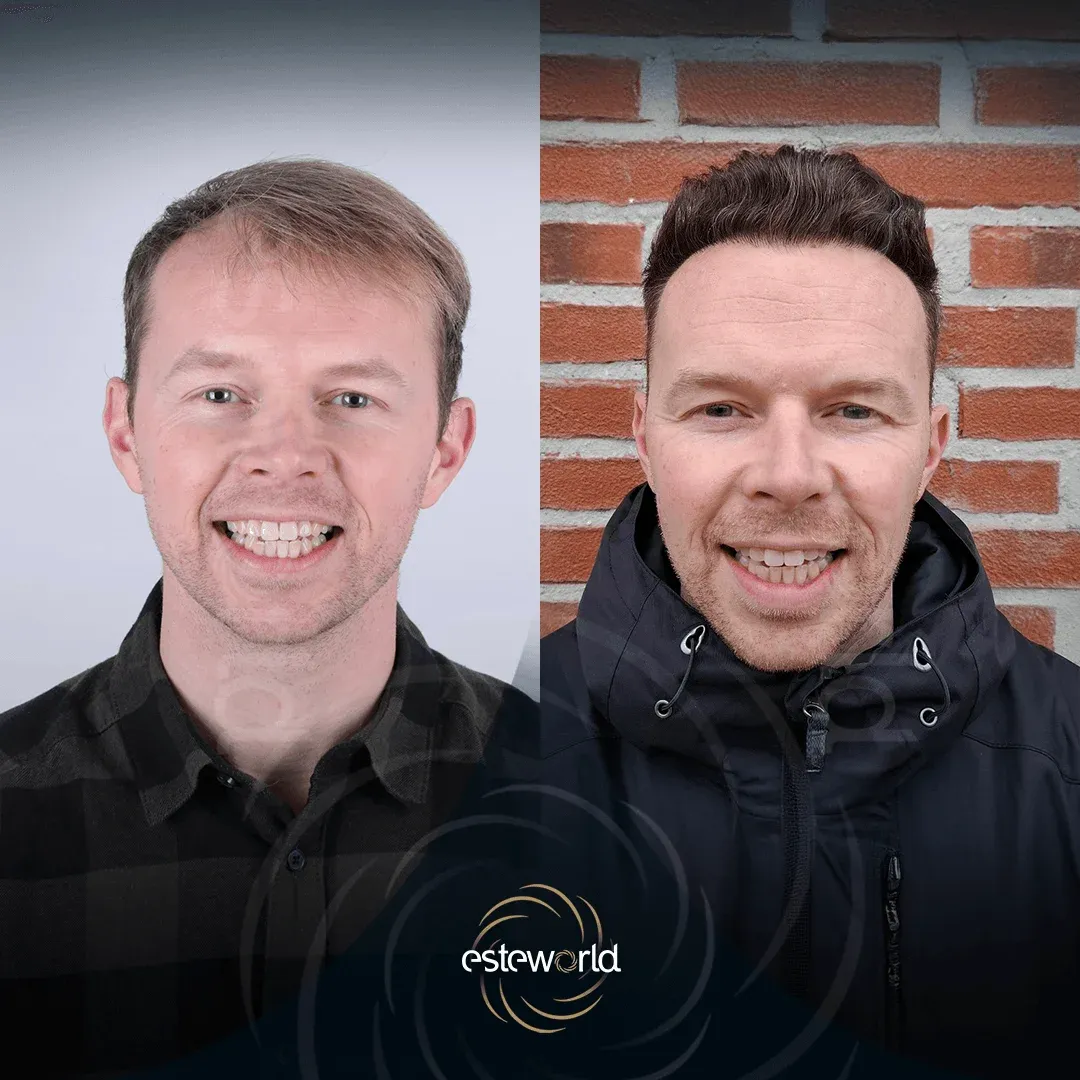
Before & after
Published results
Questions
What is a DHI hair transplant?
DHI (Direct Hair Implantation) is a variation of FUE in which each graft is loaded into a Choi implanter pen and placed into the scalp in one motion, without a separate incision stage. It gives precise control over the angle and depth of each hair and allows unshaven procedures.
Is DHI better than FUE?
Neither is better overall. DHI gives more control per graft and suits hairlines, the crown and unshaven procedures. Sapphire FUE is faster and suits large areas. Many patients receive both in one session.
What is a Choi implanter?
A pen-shaped instrument with a hollow needle, developed in South Korea. A graft is loaded into the needle, the needle is inserted into the scalp at the planned angle, and a plunger releases the graft. Implanters are single-use and come in several needle diameters matched to graft size.
Does DHI need shaving?
Not always. The recipient area can often be left unshaven for procedures of up to around [2,500] grafts. The donor area is usually shaved in a narrow band that longer hair covers. Larger procedures generally require full shaving.
How many grafts can be placed with DHI in one day?
Typically [3,000 to 3,500]. DHI is slower than Sapphire FUE, so larger procedures are planned over two consecutive days or combined with Sapphire FUE for the mid-scalp.
Is DHI good for a widow's peak or a new hairline?
Yes. Hairline design, including temple points and a widow’s peak, is where DHI’s control over angle and depth matters most. The hairline should be designed for your age and facial proportions, not simply drawn as low as possible.
Is DHI suitable for curly or Afro-textured hair?
Often, yes. Curly and Afro-textured hair has a curved follicle below the skin, which makes extraction harder and depth control during implantation important. DHI gives that control, although extraction takes longer and graft counts per session may be lower.
Does DHI hurt?
The anaesthetic injections at the start are the only uncomfortable part. After that the scalp is numb. Most patients report tightness and tenderness for two to three days, managed with standard painkillers.
In the same family
Medical content from esteworldturkey.com. Every plan starts with a doctor’s assessment. Source page ↗