Hair Transplant
Hair Transplant
Hair transplant in Turkey is a surgical procedure in which follicular units are extracted from a permanent donor area at the back and sides of the scalp and implanted into thinning or bald regions. Most patients need 2,500–5,000 grafts, the operation takes 6–8 hours under local anaesthesia, and final density is visible at 10–12 months.
Free consultation+44 20 3337 6262
At a glance
- Procedure duration
- Local
- Anaesthesia
- 2–3 days
- Sensitivity Period
- 3–5 days
- Return to Work
- 7–10 days
- Initial Recovery
- 10–12 months
- Final Results
- Not required
- Hospital Stay
- Operating since 1994
All treatments
- 01FUE Hair Transplant
- 02Sapphire FUE Hair Transplant
- 03DHI Hair Transplant
- 04FUT Hair Transplant
- 05Unshaven Hair Transplant
- 06Female Hair Transplant
- 07Robotic Hair Transplant
- 08Afro Hair Transplant
- 09Micro FUE Hair Transplant
- 10Bio FUE Hair Transplant
- 11Biofibre Hair Transplant
- 12Hair Transplant with Sedation
- 13Eyebrow Transplant
- 14Beard Transplant
- 15Moustache Transplant
What Does a Hair Transplant in Turkey Cost?
A hair transplant in Turkey costs between $1,800 and $2,500 for an all-inclusive package covering roughly 3,000 grafts, or $0.60–$0.83 per graft. The same procedure costs $7,000–$10,000 in the UK and $9,000–$12,000 in the US, where the quoted price usually covers surgery only.
Three variables move the figure: the number of grafts your Norwood level requires, the technique (FUT is the least expensive, DHI and Sapphire FUE sit at the upper end), and what the package includes.
| Graft count | Typical Norwood level | Price range (all-inclusive) | Session |
|---|---|---|---|
| 1,500–2,500 | Norwood 2–3 | $1,500 – $1,900 | 1 day |
| 2,500–3,500 | Norwood 3–4 | $1,800–$2,200 | 1 day |
| 3,500–4,500 | Norwood 4–5 | $2,100–$2,500 | 1 day |
| 4,500–6,000 | Norwood 5–6 | $2,400–$3,000 | 1–2 days |
What Is Included in an All-Inclusive Hair Transplant Package?
An all-inclusive hair transplant package in Turkey covers the procedure itself plus the logistics around it: airport transfers, 2–3 nights of hotel accommodation, blood tests, medication, the aftercare kit, the first wash, and a translator throughout. Flights are normally excluded.
- Pre-operative blood tests and scalp analysis
- Hairline design consultation with the surgeon
- The procedure and local anaesthesia
- Medication for the recovery period
- Aftercare kit (lotion, shampoo, foam)
- First wash performed at the clinic
- VIP airport and hotel transfers
- 2–3 nights' hotel accommodation
Hair Transplant Techniques in Turkey
Turkish clinics use four main techniques: FUE, Sapphire FUE, DHI and FUT. They differ in how grafts are extracted and how the recipient channels are opened, which changes scarring, density potential, recovery time and price. FUE and its sapphire variation account for the large majority of procedures performed in Turkey today.
| Technique | Extraction | Channel opening | Best suited to | Grafts / session | Recovery |
|---|---|---|---|---|---|
| FUE | Micro-punch, unit by unit | Steel blade | Most patterns; the default option | 3,000–4,500 | 7–10 days |
| Sapphire FUE | Micro-punch, unit by unit | Sapphire-tipped blade | High-density work and fine hairlines | 3,000–5,000 | 5–8 days |
| DHI | Micro-punch, unit by unit | No separate channel — Choi implanter | Hairline refinement, unshaven work, women | 2,000–3,500 | 5–7 days |
| FUT | Strip harvesting | Steel blade | Very high graft needs, limited donor | 4,000–6,000 | 12–14 days |
| Robotic | Automated punch | Steel or sapphire | Straight hair, uniform donor areas | 2,500–4,000 | 7–10 days |
DHI (Direct Hair Implantation)
removes the channel-opening step entirely. The graft is loaded into a Choi implanter pen and placed directly, so the surgeon controls angle, direction and depth in a single movement. This makes it the preferred choice for hairline work and for procedures where the head is not shaved. See our DHI hair transplant page for the Choi pen protocol.
Sapphire FUE
is a variation of FUE in which the recipient incisions are opened with sapphire-tipped blades instead of steel. The sharper, smoother edge produces narrower channels, which allows grafts to sit closer together and shortens crusting time. We cover the density and healing differences on our Sapphire FUE hair transplant page.
FUE (Follicular Unit Extraction)
is the baseline method. Follicular units are removed individually from the donor area with a micro-punch of 0.7–0.9 mm, leaving dot-shaped marks rather than a linear scar. Read the full procedure and recovery detail on our FUE hair transplant page.
FUT (Follicular Unit Transplantation)
harvests a strip of scalp from the donor area and dissects it into grafts under a microscope. It leaves a linear scar but yields a high graft count in one session, which still makes it relevant for advanced hair loss. Details on our FUT hair transplant page.
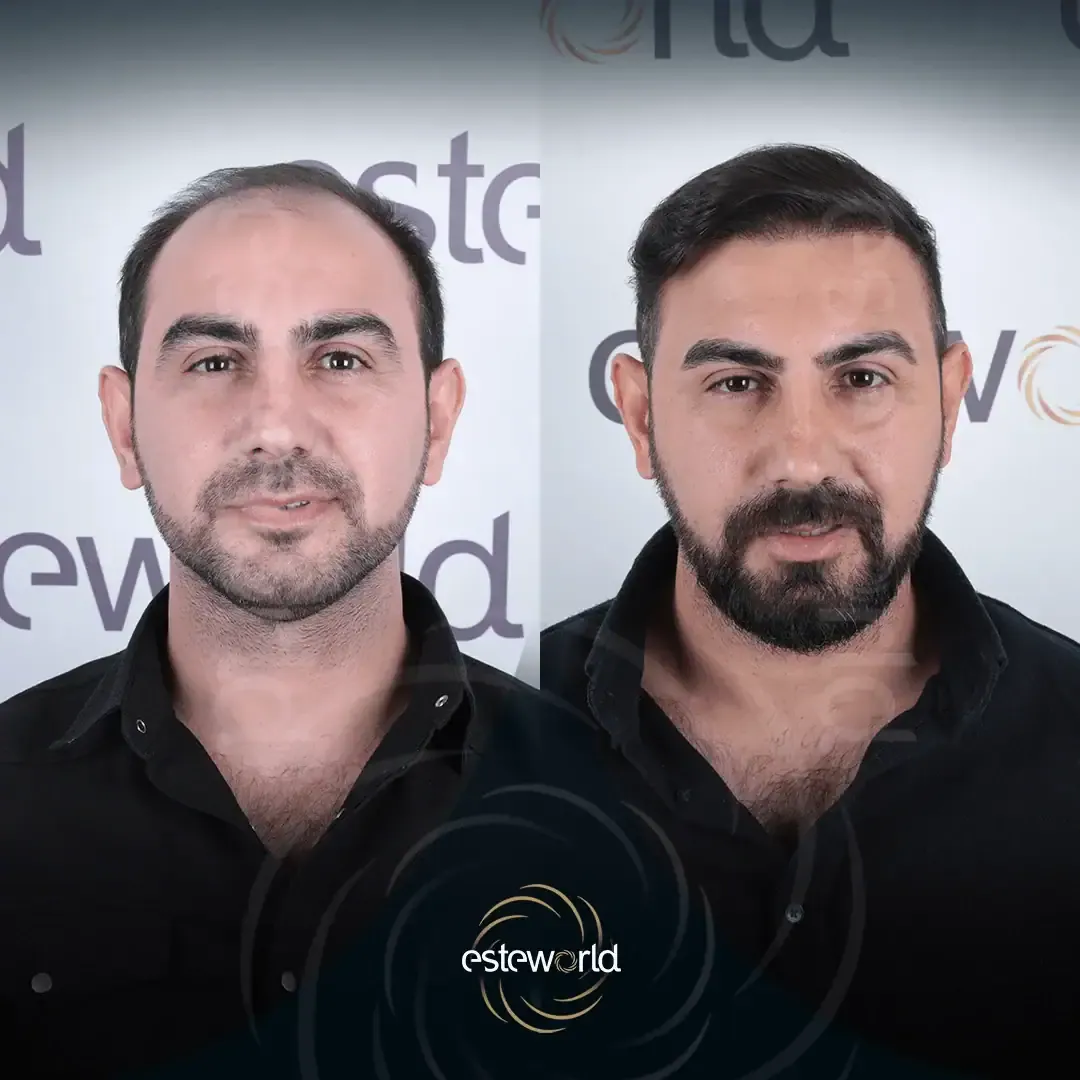
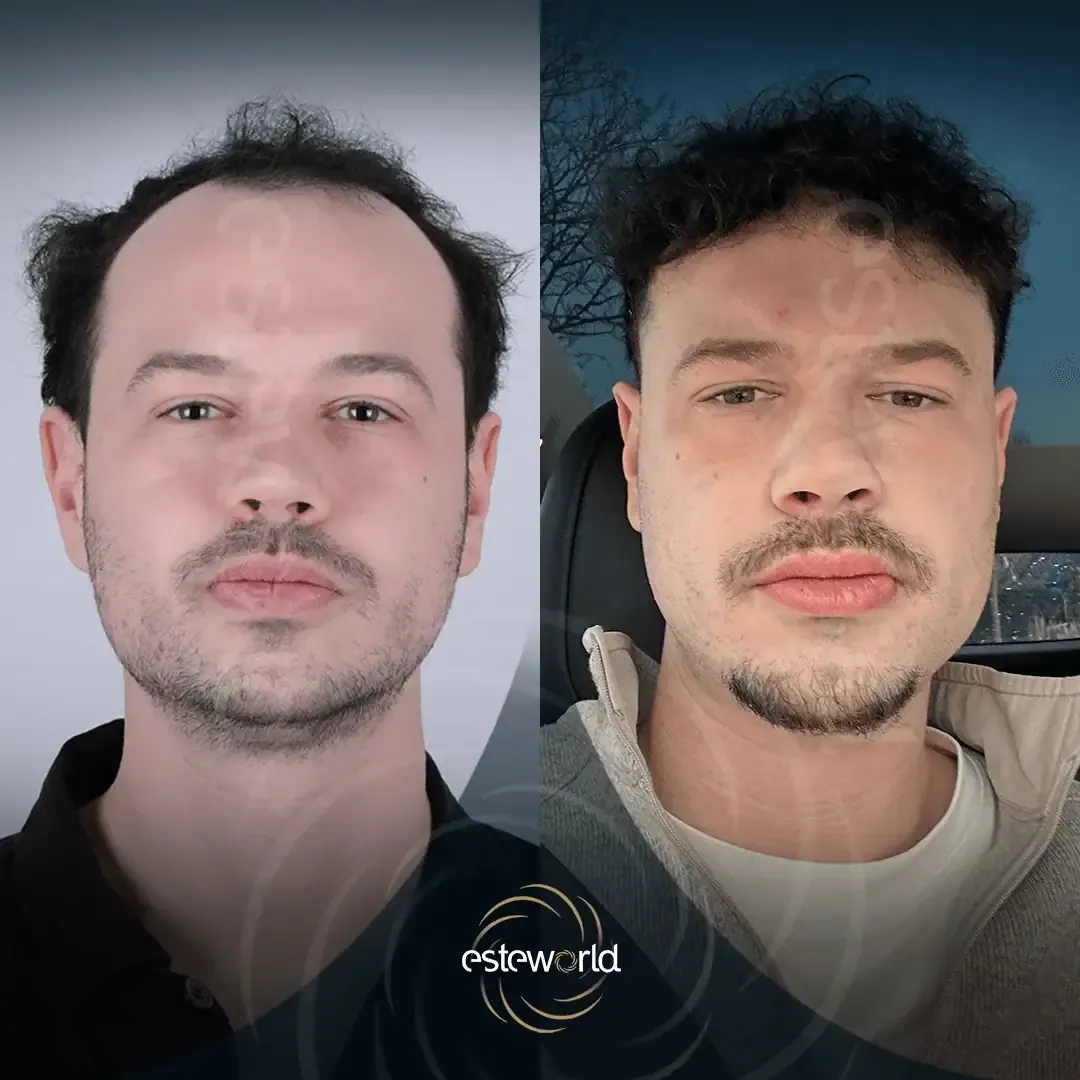
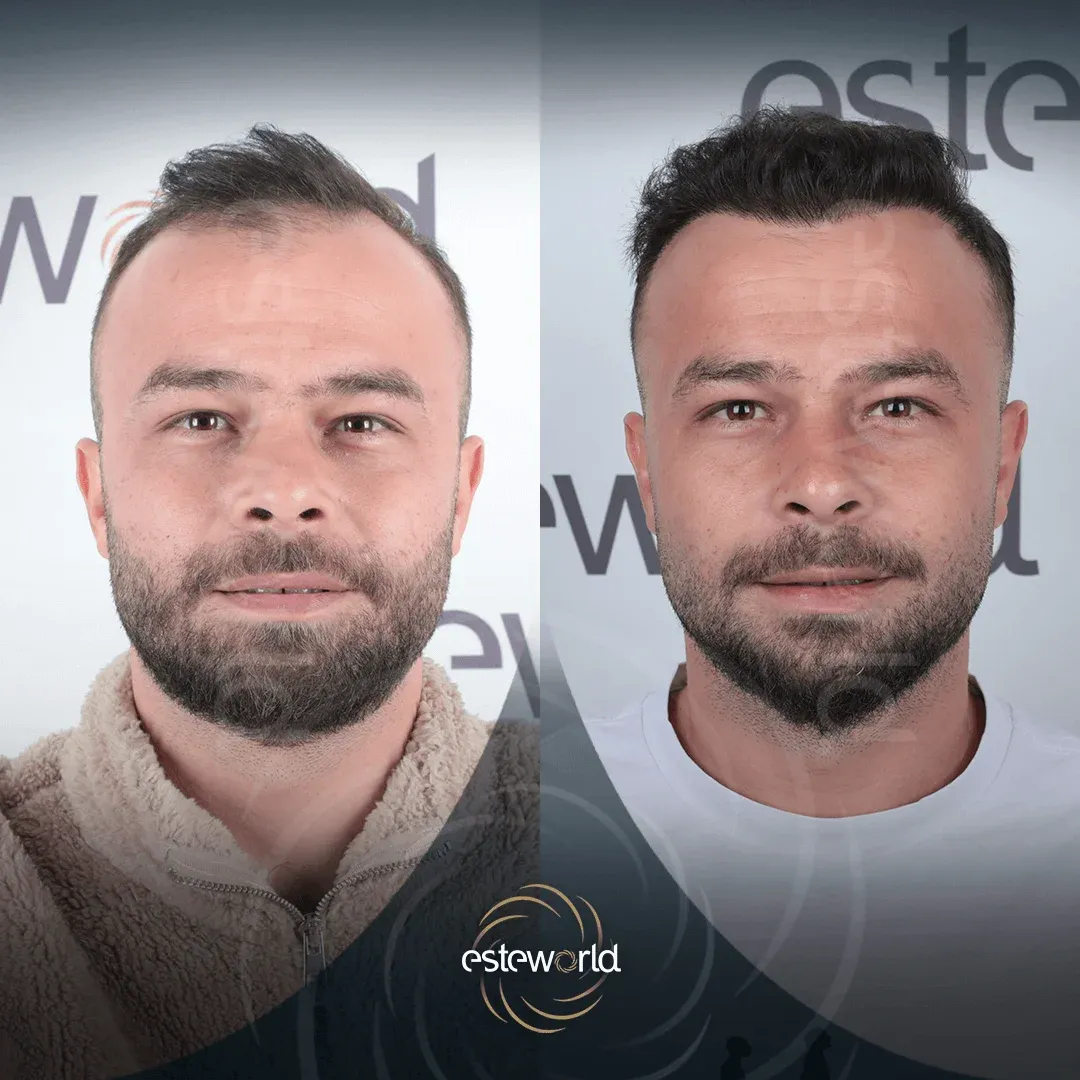
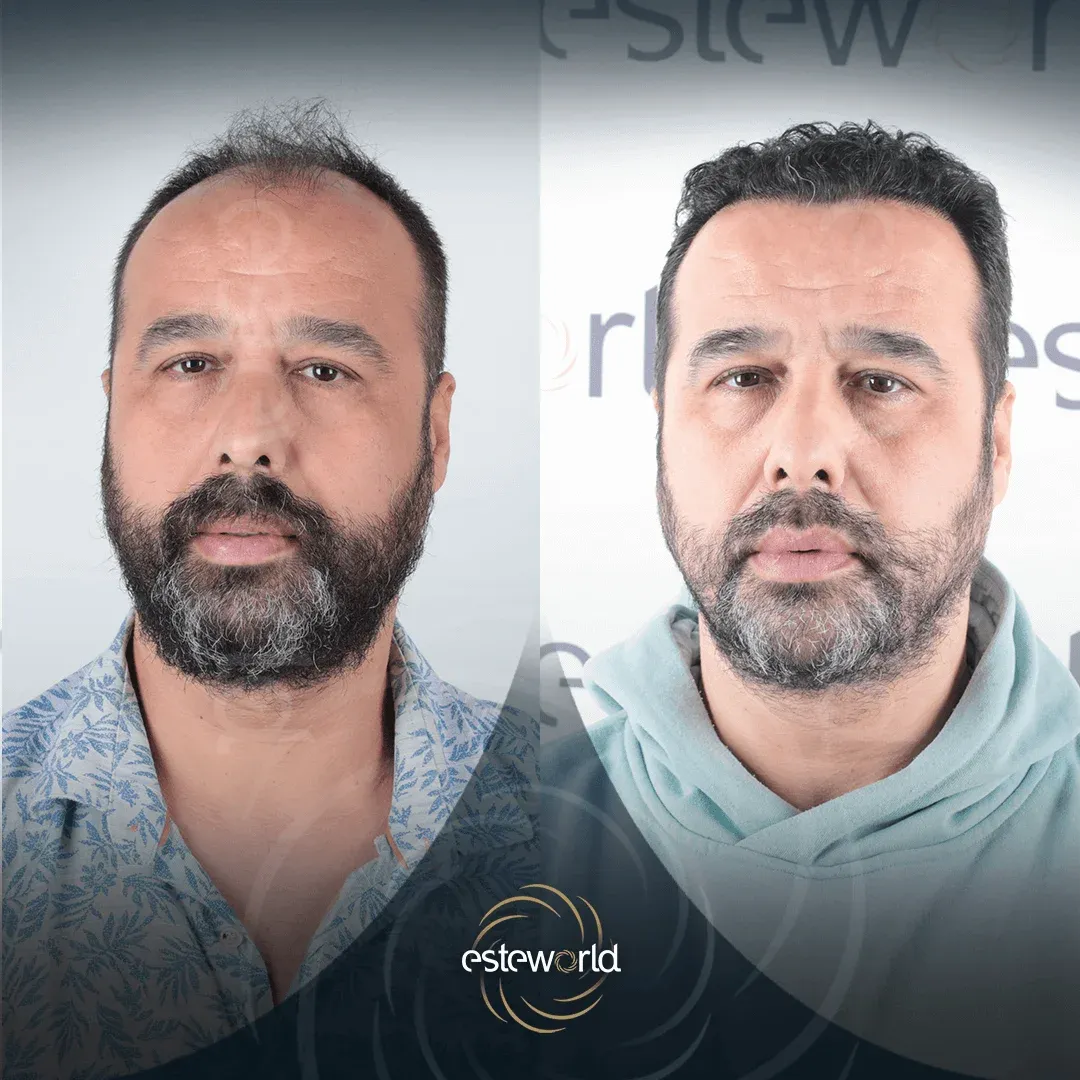
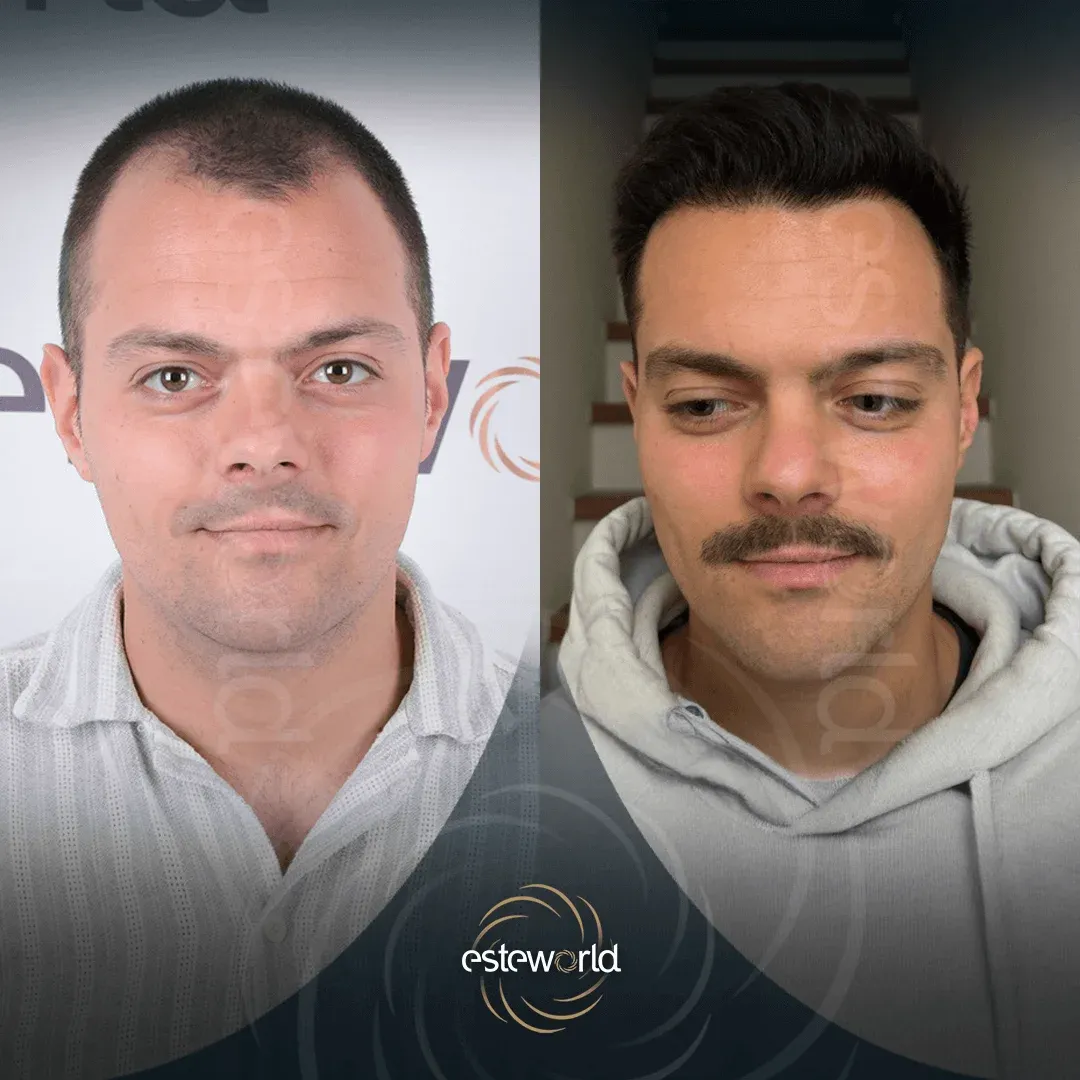
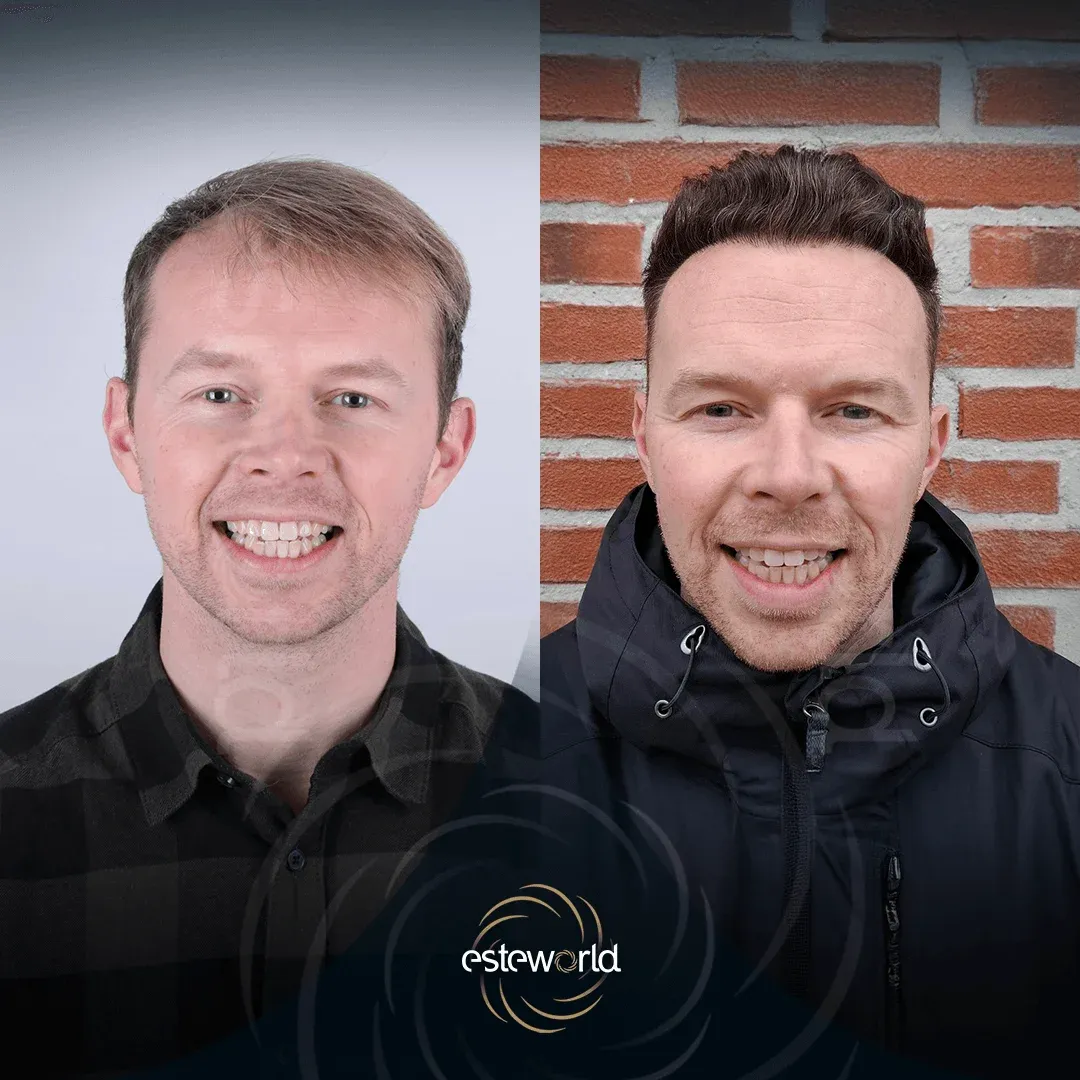
Before & after
Published results
Questions
How much is a hair transplant in Turkey?
An all-inclusive package for around 3,000 grafts costs $1,800–$2,500. The figure moves with graft count and technique.
How many days do I need to stay in Turkey?
Three to four nights. Day 1 consultation and surgery, Day 2 check, Day 3 first wash, Day 4 departure.
Does a hair transplant hurt?
The procedure is performed under local anaesthesia and is not painful. The anaesthetic injections themselves cause brief discomfort; sedation is available.
When will I see the result?
Regrowth begins at month 3, about 60% of density is visible at month 6, and the result matures between months 10 and 12.
Is the result permanent?
Grafts taken from the permanent donor zone keep their genetic resistance to DHT and do not fall out. Untransplanted native hair can continue to thin, which is why pattern stability matters.
Can I have a hair transplant without shaving my head?
Yes, with the unshaven technique, though the graft count achievable in one session is lower.
Can women have a hair transplant?
Yes. Female pattern loss is diffuse rather than receding, so planning and technique differ.
What is the best age for a hair transplant?
Most surgeons prefer patients over 25, because the pattern needs to be stable before permanent grafts are placed.
Medical content from esteworldturkey.com. Every plan starts with a doctor’s assessment. Source page ↗