II La maison

A house of earth and fire

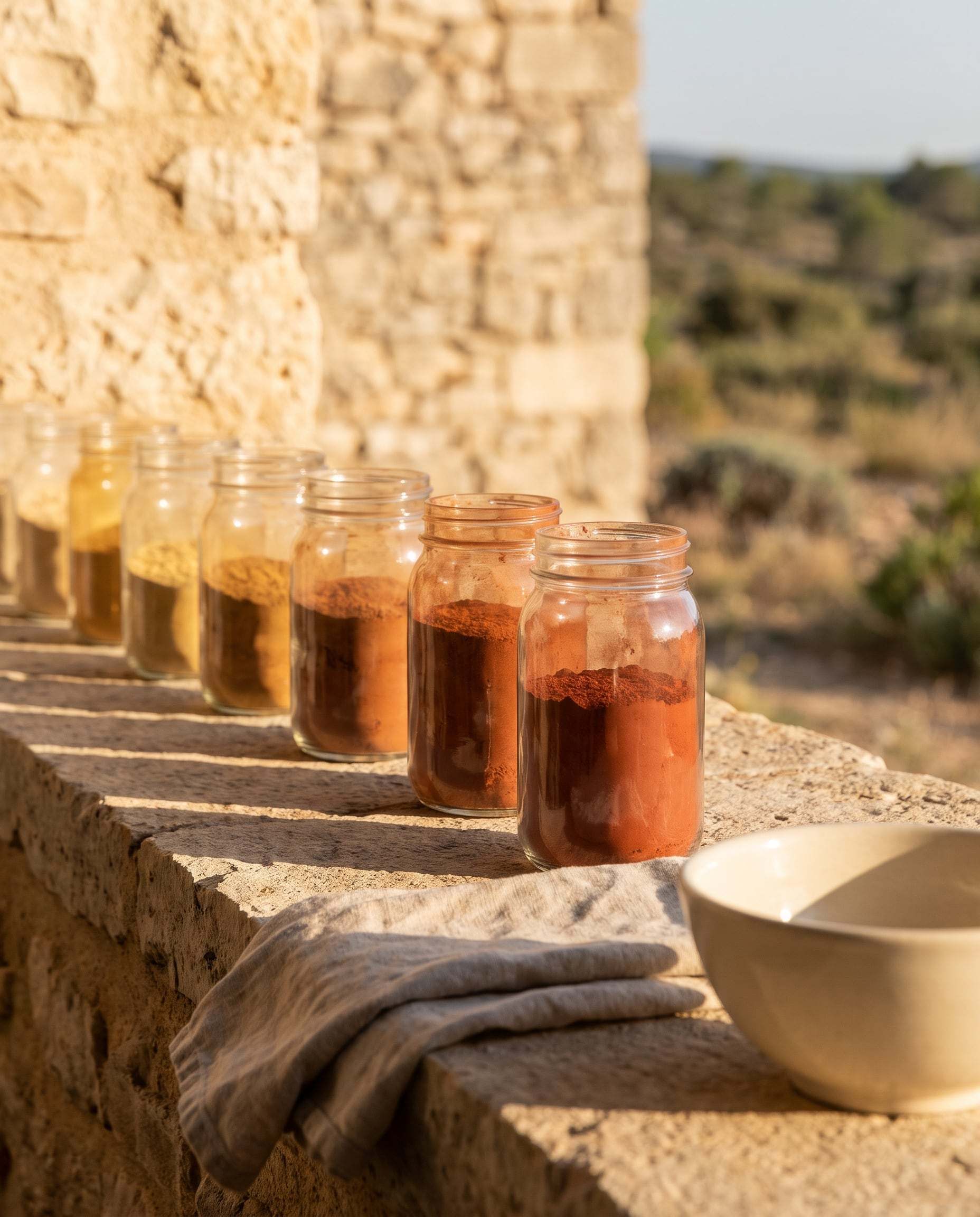
Sienne is named after a painter’s earth: raw, it is the gold-brown of these cliffs; fired, a deep red. The house is small — a kitchen, two rooms, a terrace — and it cooks the way earth is made into colour.

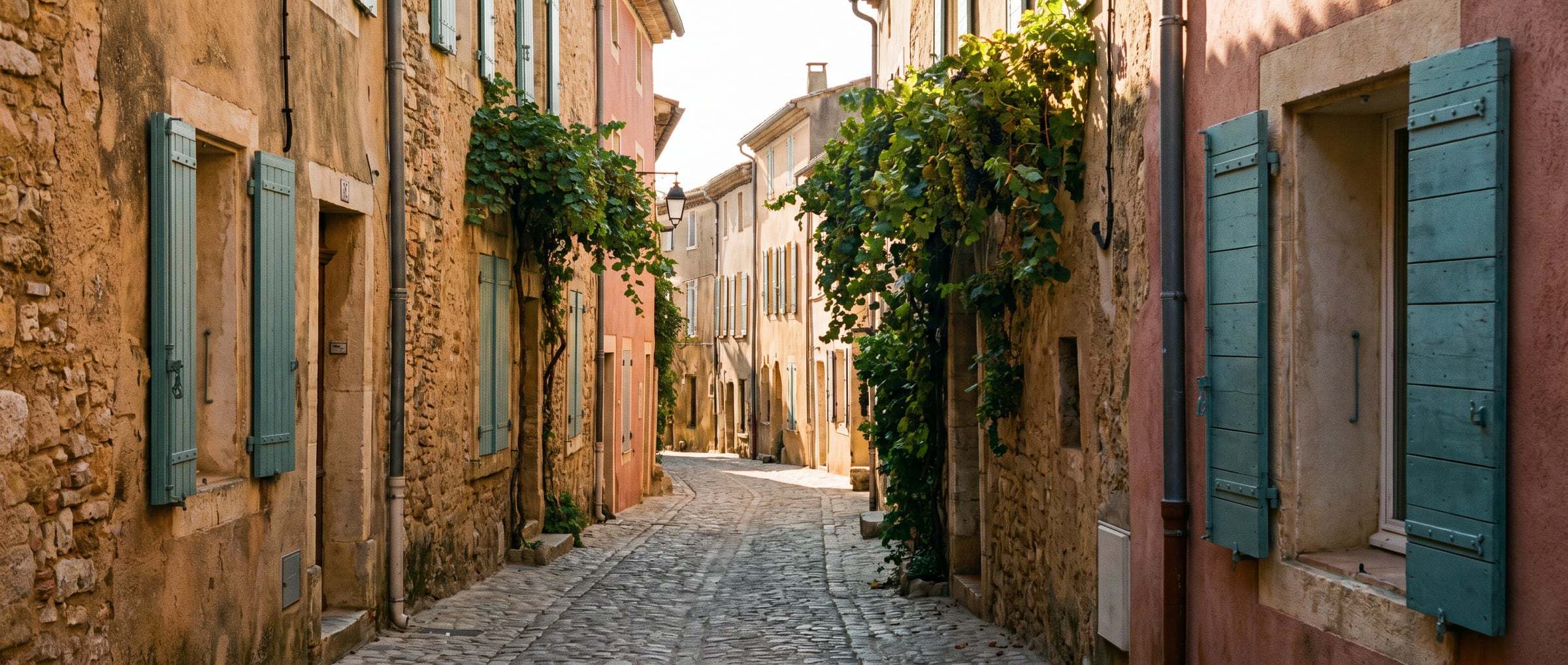
Ochre façades and painted shutters in a Roussillon lane

IIRoussillon, the lanesFaçades in seventeen shades of ochre, and shutters painted against them.

III From raw to burnt

How earth becomes sienna — and how we cook

I

Dig

The cliffs are quartz sand with a thin skin of clay and iron on every grain. For two centuries it was dug by hand, in galleries and open quarries.

In the kitchenWe start with the whole thing: the whole lamb, the whole squash, the whole fish from the morning boats.
II

Wash

Water carried the fine pigment off the sand and down long channels, leaving the quartz behind. What it carried was an earth the colour of honey and bark: raw sienna.

In the kitchenOur stocks and jus are washed and clarified the same way, until only the colour and the taste remain.

III

Settle and dry

In the basins the pigment settled for months. The water was drawn off, the paste dried in the sun and was cut into bricks.

In the kitchenTime does what we cannot: the lamb rests overnight, the figs dry on the terrace, the cheeses wait in the cellar.

IV

Fire

In the kiln the earth gives up its water and turns a deep, glowing red: burnt sienna. Nothing is added. The heat alone changes the colour.

In the kitchenThe last step is always fire: nine hours for the lamb, a few seconds of flame for the figs.

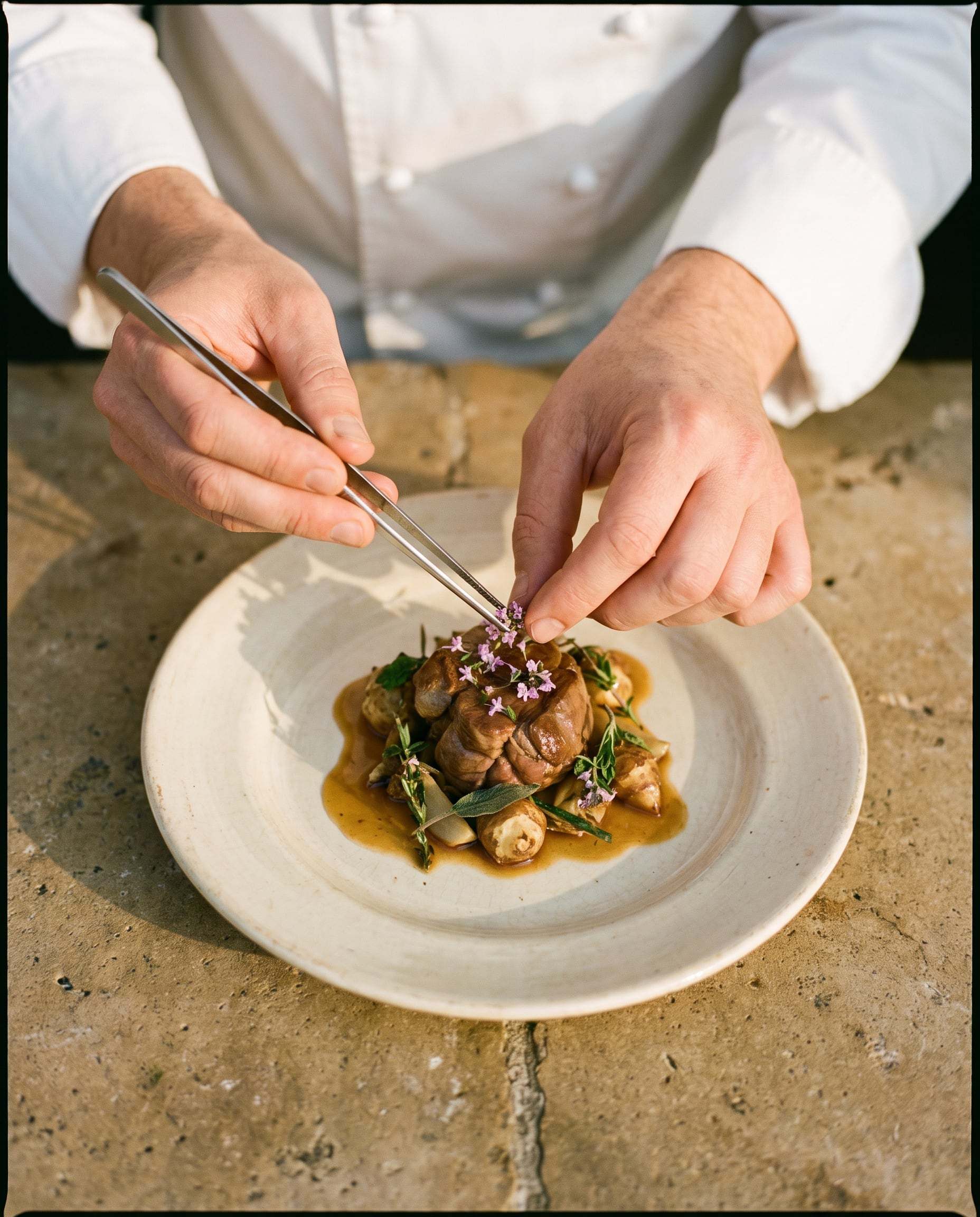
Hands placing thyme flowers on a plate at the pass
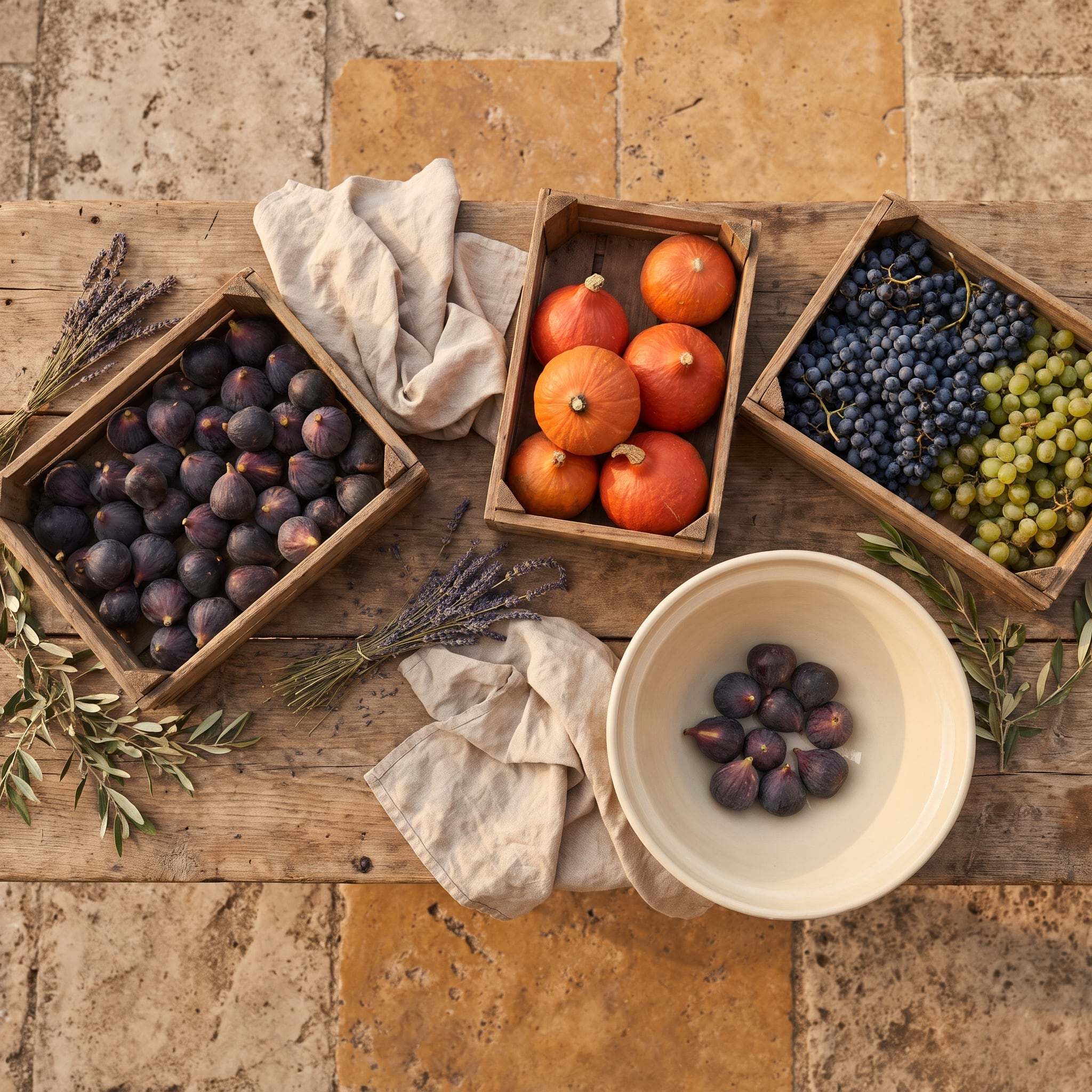
Crates of figs, squash and grapes at a morning market

IVAt the pass · thyme flowers on the lamb

IV The kitchen

The kitchen faces the pass

A narrow kitchen behind the dining room, with one long pass where every plate is finished by hand. The menu is written on Tuesday, when we are closed, after the morning market in Gordes and a walk along the cliffs.

Vegetables come from a garden below the village; the lamb from Sisteron, the fish from the Marseille boats, the cheese from farms we can drive to before lunch.

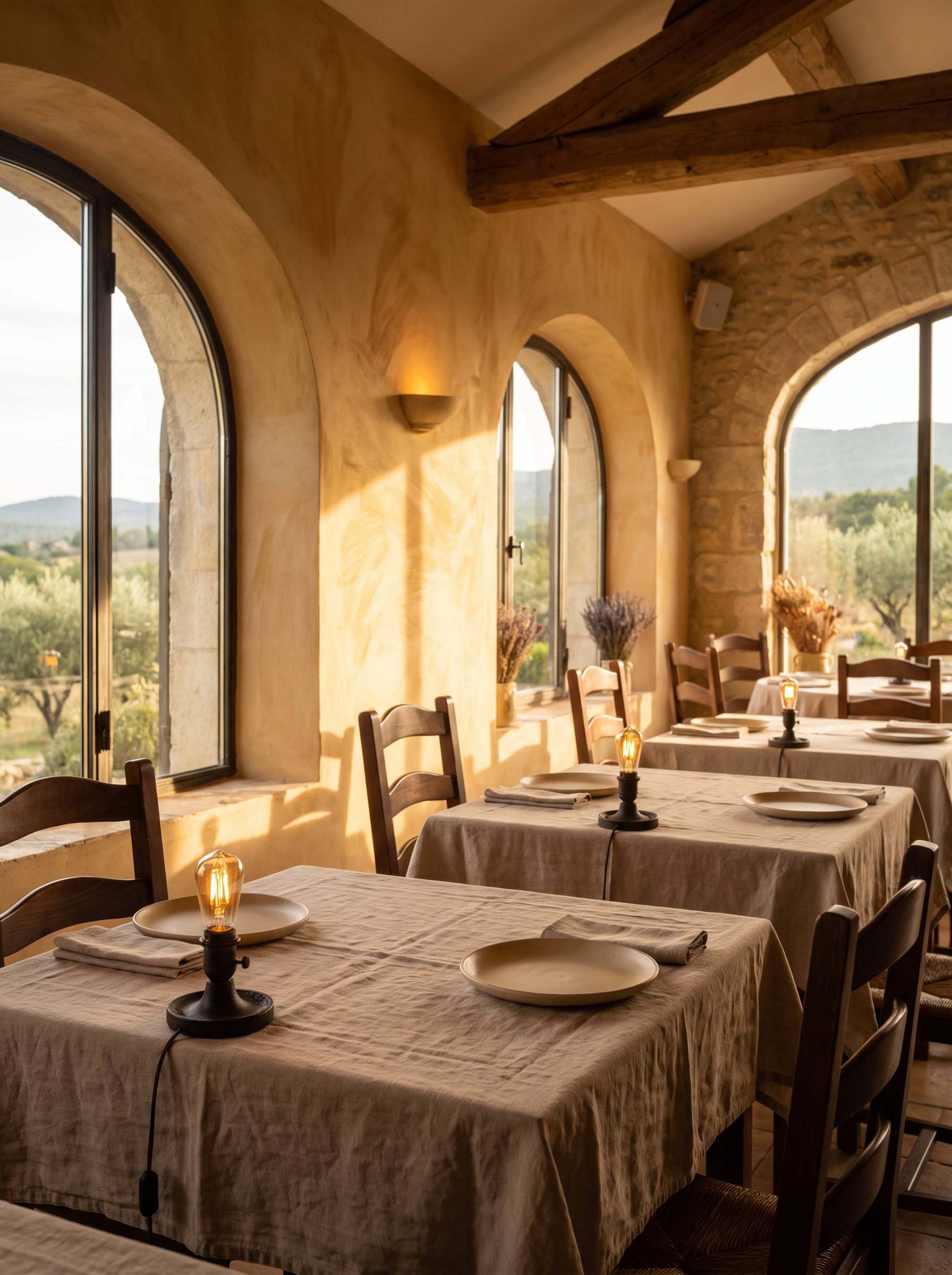
The dining room with ochre limewash, linen tables and lamps

VLa salle · limewash, linen, lamps

V The room

The room is a gallery

Two limewashed rooms, tinted with ochre dug a few hundred metres away. The walls are bare on purpose: the plates are the only works we hang.

Twenty-eight seats, spaced so that conversations stay at their own table. Lunch is bright with the shutters open; dinner is lit low.

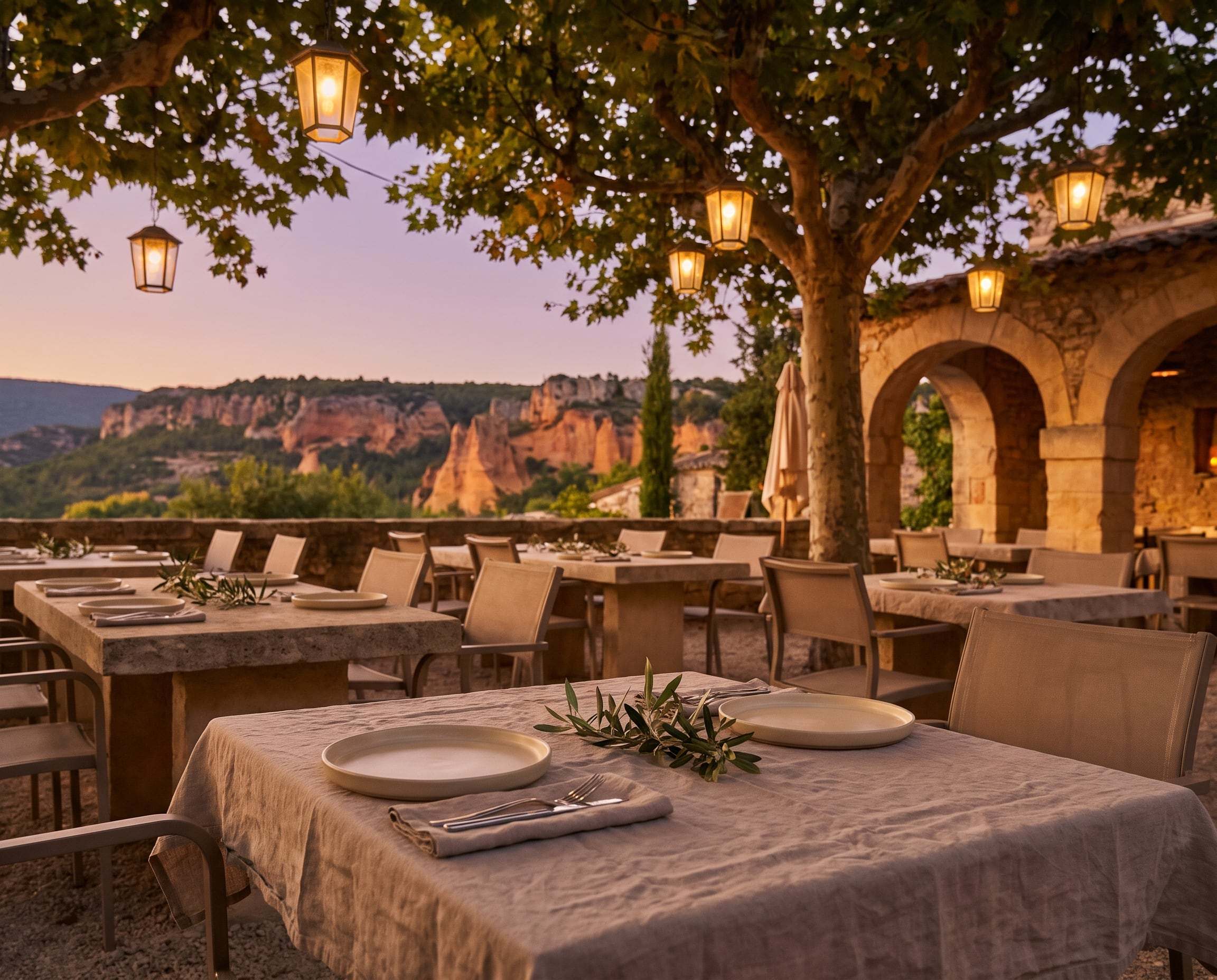
The terrace at dusk under plane trees

VILa terrasse · two plane trees, evening

VI The terrace

The terrace faces the cliffs

When the mistral allows, lunch moves outside under two plane trees, facing the ochre. In the evening the cliffs go from gold to red while you eat.

Terrace tables are kept for those who ask for them, and we move you inside without fuss if the wind rises.

VII Winter

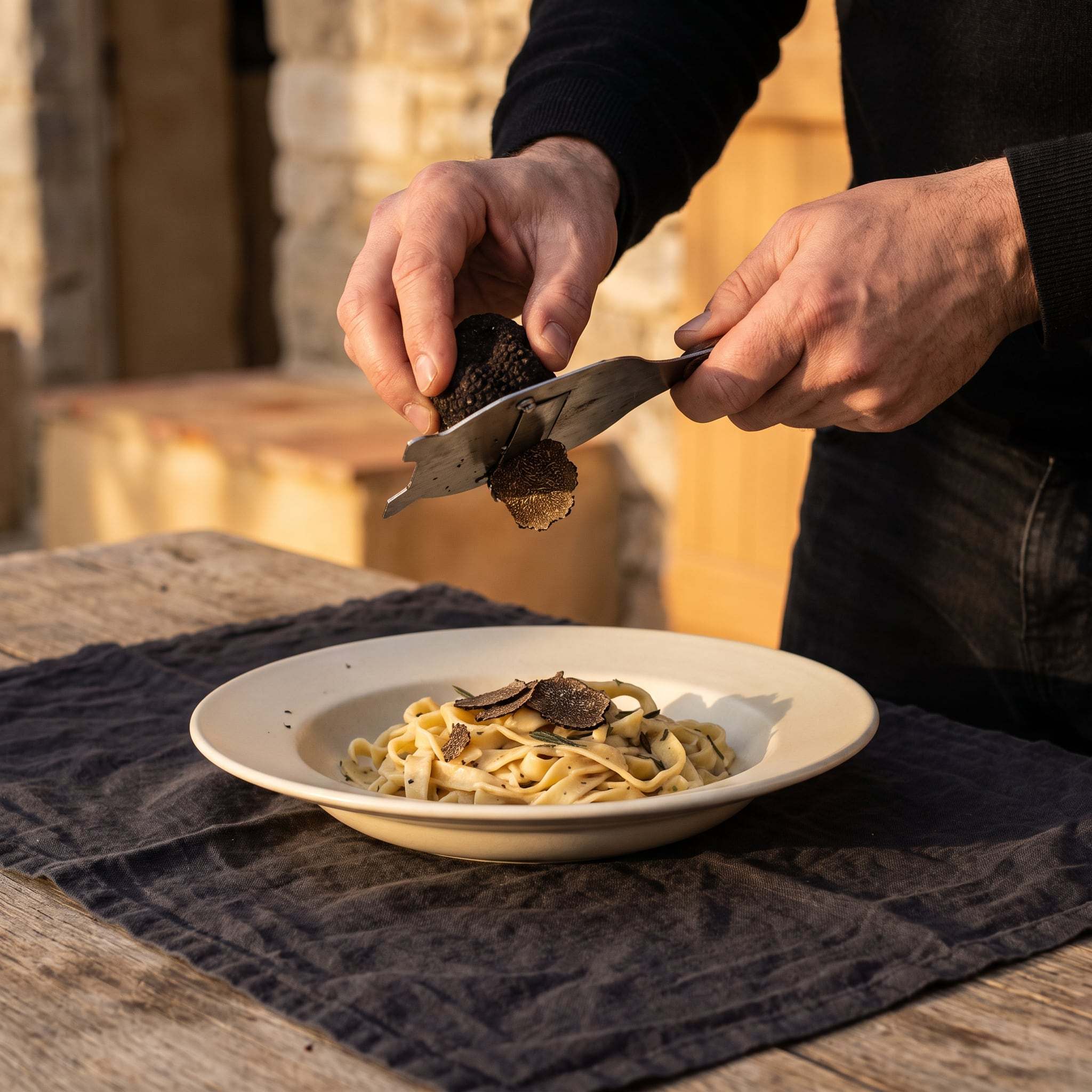
From December, the black truffle of the Ventoux

When the figs are gone and the cliffs turn their deepest red, truffles from the Ventoux oaks come to the table. We shave them over the épeautre from December to March, as a supplement to either promenade.

See the menus
A black truffle shaved over a dish at the table
Jars of earth pigments from ochre yellow to burnt sienna

∴ Thursday — Monday

The door is open at noon and at half past seven