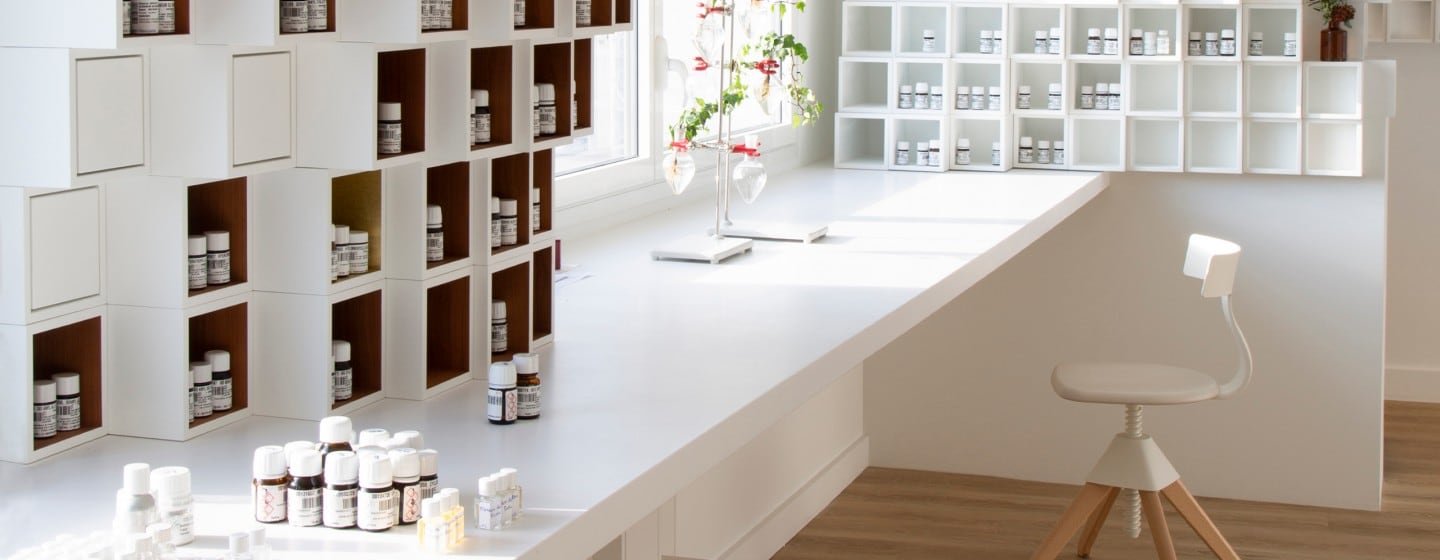
In 1921 Hélène Lauvère, a stone-cutter, and her brother Émile, an engraver, rented a single oak bench in a Paris courtyard. One cut the stones, the other cut the metal around them. A century later the bench is still in use, and every piece is still drawn beside it. (An invented maison: this story is the concept.)
Dates
Every icon began at the same bench
1921One bench, two craftsHélène Lauvère, a stone-cutter, and her brother Émile, an engraver, rent a single oak bench in a Paris courtyard.
1923The first solitaireThe first ring sold over the counter: one stone, four claws. The Solitaire Première is still made the same way.
1931The cat at the doorA sleeping-cat brooch for a client who fed the strays at the workshop door becomes the Félin.
1936CarréeThe Maison’s first wristwatch: a square held between two straight side rails.
1948TriadeThree bands in three golds, one for each person then working at the bench.
1952AviateurA watch drawn from a cockpit instrument panel, with eight visible screws on the bezel.
1958LondonA first salon outside Paris opens on Albemarle Row, Mayfair.
1967SermentA bangle that closes with two screws and cannot be put on alone.
1978ClavetteA workshop pin, drawn out in gold and bent once around the wrist.
1996The Jura atelierTwelve watchmakers begin finishing the Maison’s movements in a small atelier in the Jura.
2008BolideA speedometer dial and a headlamp date window.
2014The Lauvère SchoolThe workshop opens its bench to six apprentices a year, in setting, engraving and watchmaking.
2019ContrastePyramid studs against round beads: soft against sharp.
Three addresses
Paris, London, the Jura
A workshop, a salon and an atelier: the three places where a Lauvère piece is drawn, shown and kept running.
Fig. 01 — The bench, Cour des Lapidaires
Paris · 1921
Cour des Lapidaires
The courtyard workshop where the Maison began, and where every piece is still drawn. The oak bench is still in use.
London · 1958
Albemarle Row
The first salon outside Paris: a narrow Georgian house in Mayfair with a stone-cutting window on the ground floor.
Jura · 1996
The Jura atelier
A farmhouse in the Jura where twelve watchmakers assemble, regulate and service every watch the Maison signs.
Savoir-faire
Made under one roof
Every piece is drawn, made and finished by the Maison itself, at the Paris bench and in the Jura atelier.
01 / 04
Jewellery savoir-faire
Every piece begins as a gouache drawing at the Paris workshop and stays under one roof until it is finished: modelling, casting, stone-setting, polishing. The setters still work at the long oak bench where the Maison began, beside the laser welders that replaced the blowpipe.
02 / 04
Watchmaking savoir-faire
The Maison designs its cases and dials in Paris and finishes its movements in a small atelier in the Jura, where twelve watchmakers assemble, regulate and service every watch. Each one is tested for twenty-one days before it is signed off.
03 / 04
Leather goods savoir-faire
Leather is cut and assembled by hand, and every clasp, stud and chain is turned in the jewellery workshop. A bag is finished only when its metal parts close with the same click as a bracelet.
04 / 04
Perfumes savoir-faire
The Maison’s perfumer composes with very few ingredients and sets each one where it can be smelled, the way a jeweller sets a stone where it can be seen. Fauve took four years and ninety-one trials.
The Lauvère School
A bench for apprentices
Since 2014 the workshop has kept places at its bench for apprentices, so that cutting, setting and engraving are learned the way the founders learned them: beside someone who already knows.
The Lauvère School
2014Opened at the Paris workshop; six apprentices a year.
Crafts taught
3Stone-setting, hand engraving and watchmaking.
The Jura atelier
12Watchmakers who assemble, regulate and service every watch.
Testing
21Days every watch is tested before it is signed off.