Cultivation is one thing. The knowledge behind how to process tea is another. Specialists transform the plant into drinkable tea in a multi-step process. Scroll: the lines take the shape of each station.
Harvest
May – October
Packaging
Rize · Ankara · Istanbul
Stations
01 — Harvest
Leaf
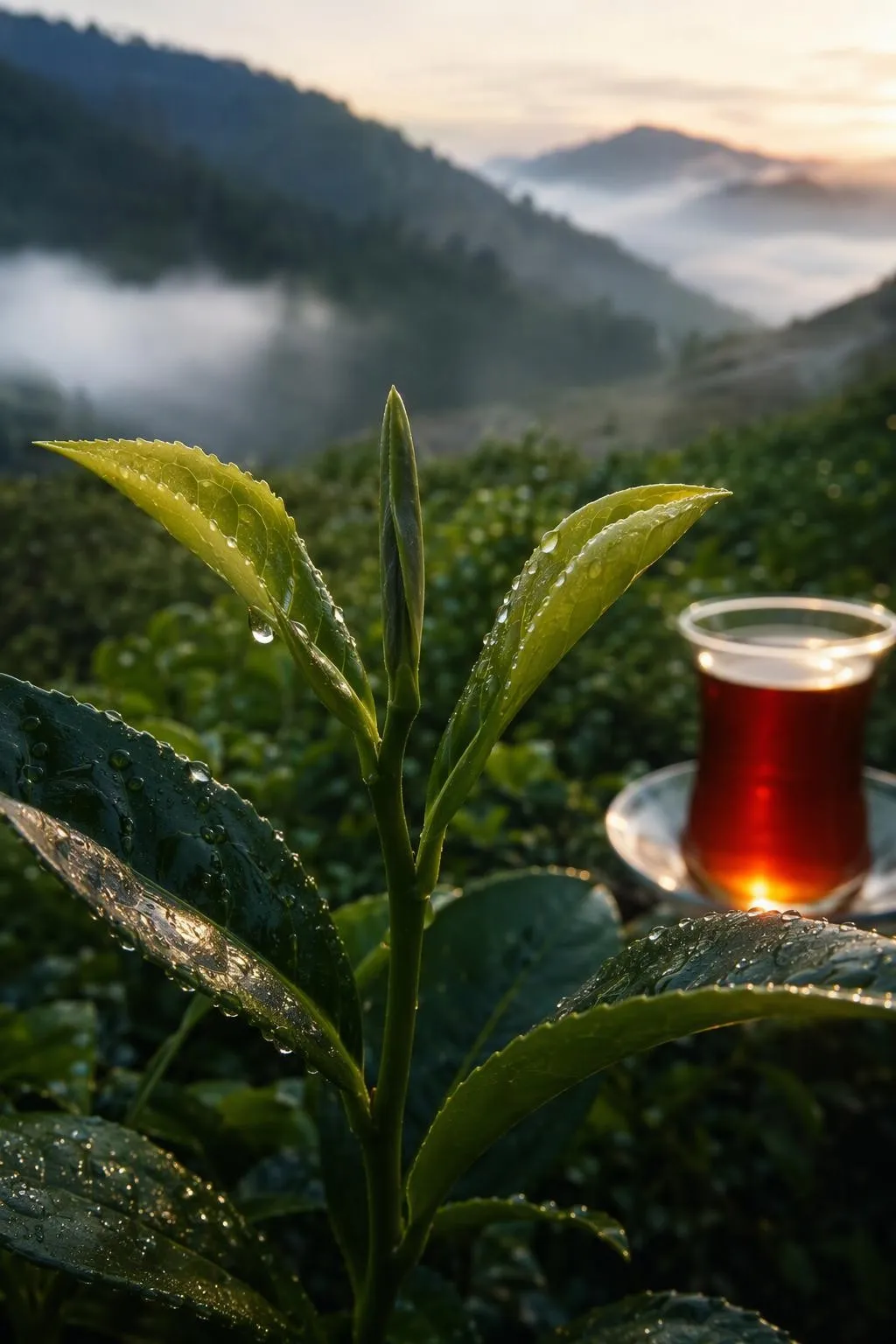
Two leaves and a bud.
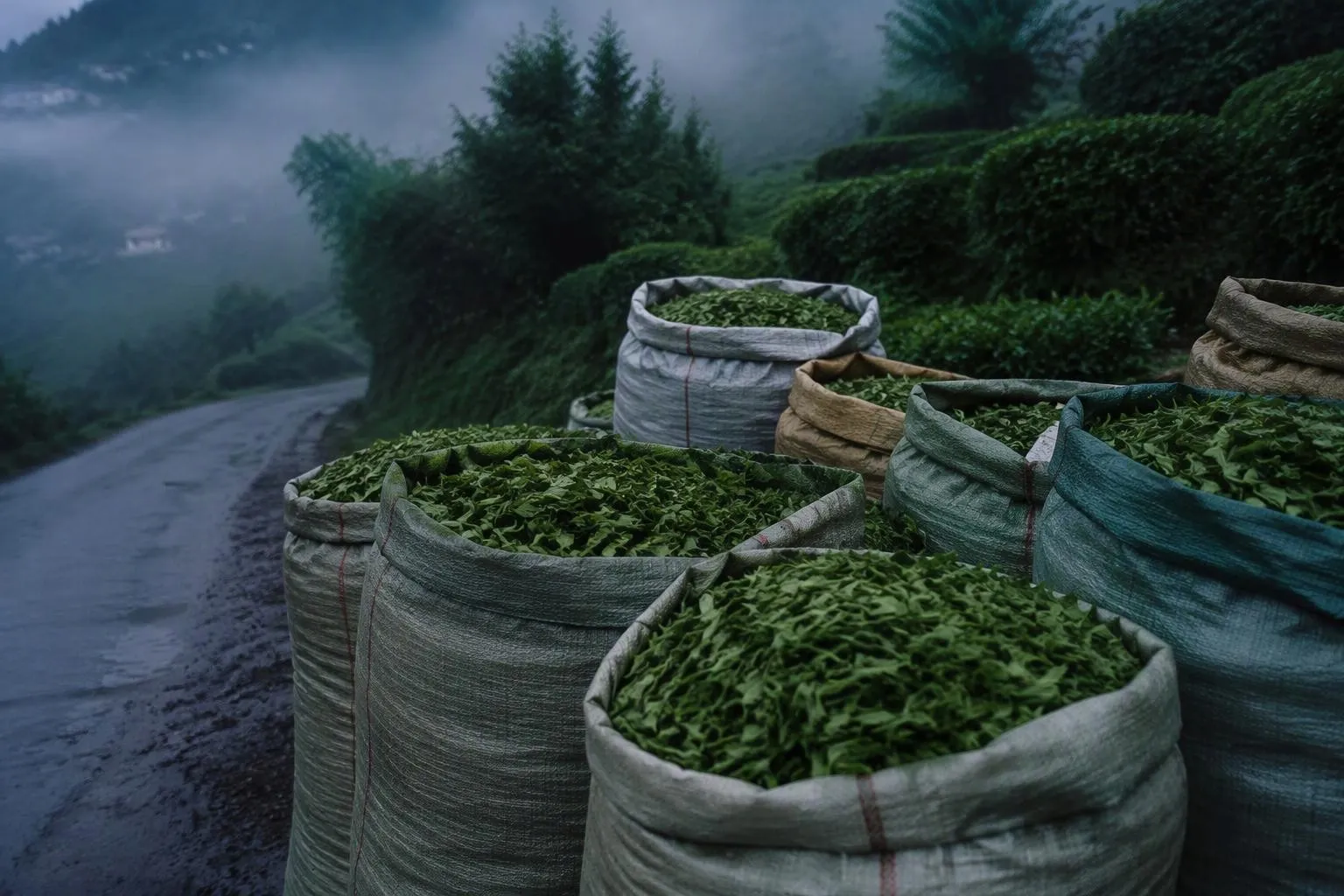
Tea leaves used to be picked by hand, but today special shears with a collection bag are used, which makes the work easier. A good picker can bring in up to 500 kg of fresh tea leaves per day. The harvest runs from May to October in three phases.
Harvest
May – October
Phases
3
Per picker
≤ 500 kg/day
02 — Water leaves
Wilting
The leaf lets go of half its water.
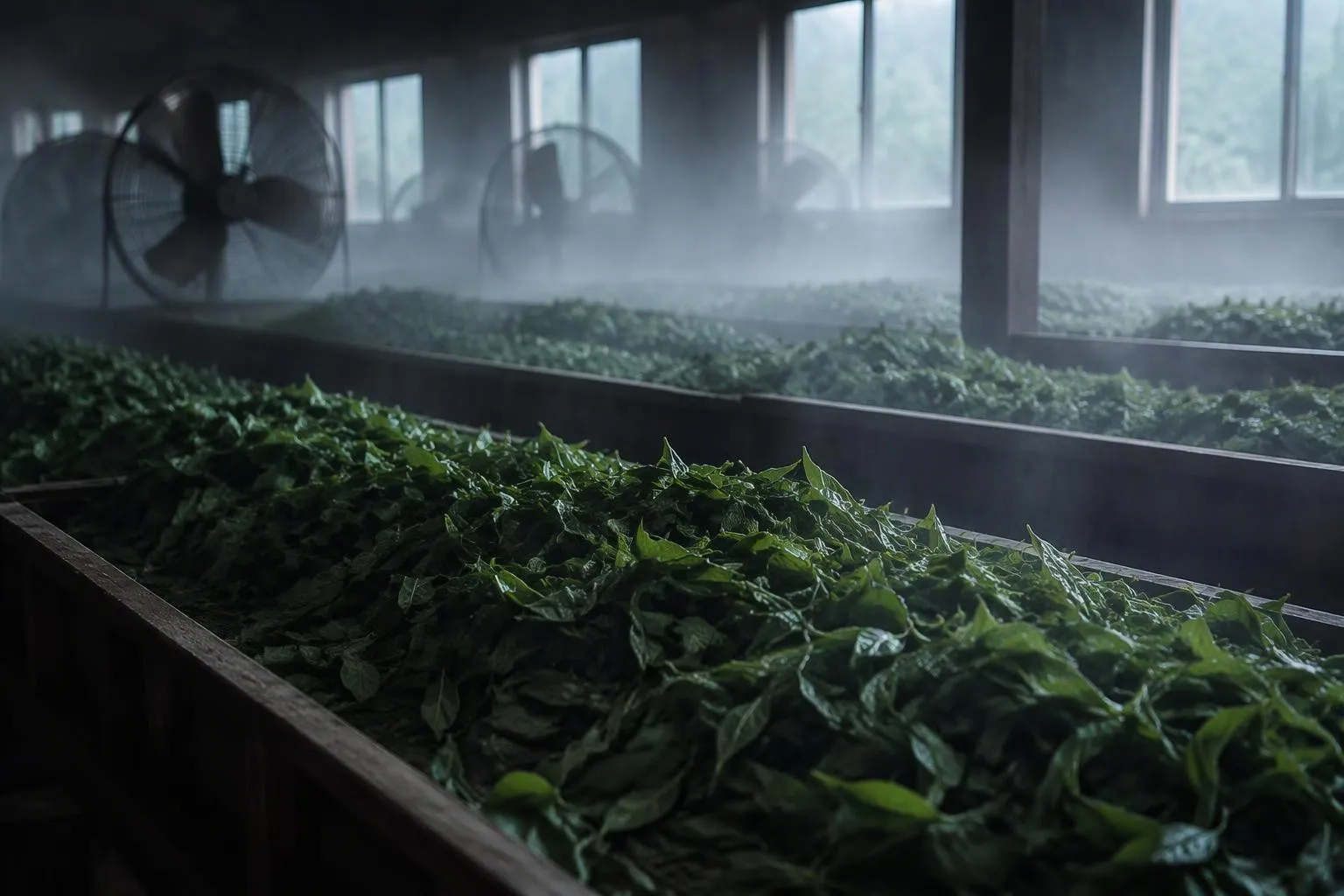
Fresh tea leaves contain up to 70 per cent cell water. Wilting reduces this to 30–35 per cent: the leaves are placed in large containers and dried for up to seven hours by huge ventilators at a constant 21 degrees Celsius.
Fresh leaf
70%
After wilting
30–35%
Temp · time
21 °C · 7 h
03 — Cells open
Rolling
Rollers break the leaf open.
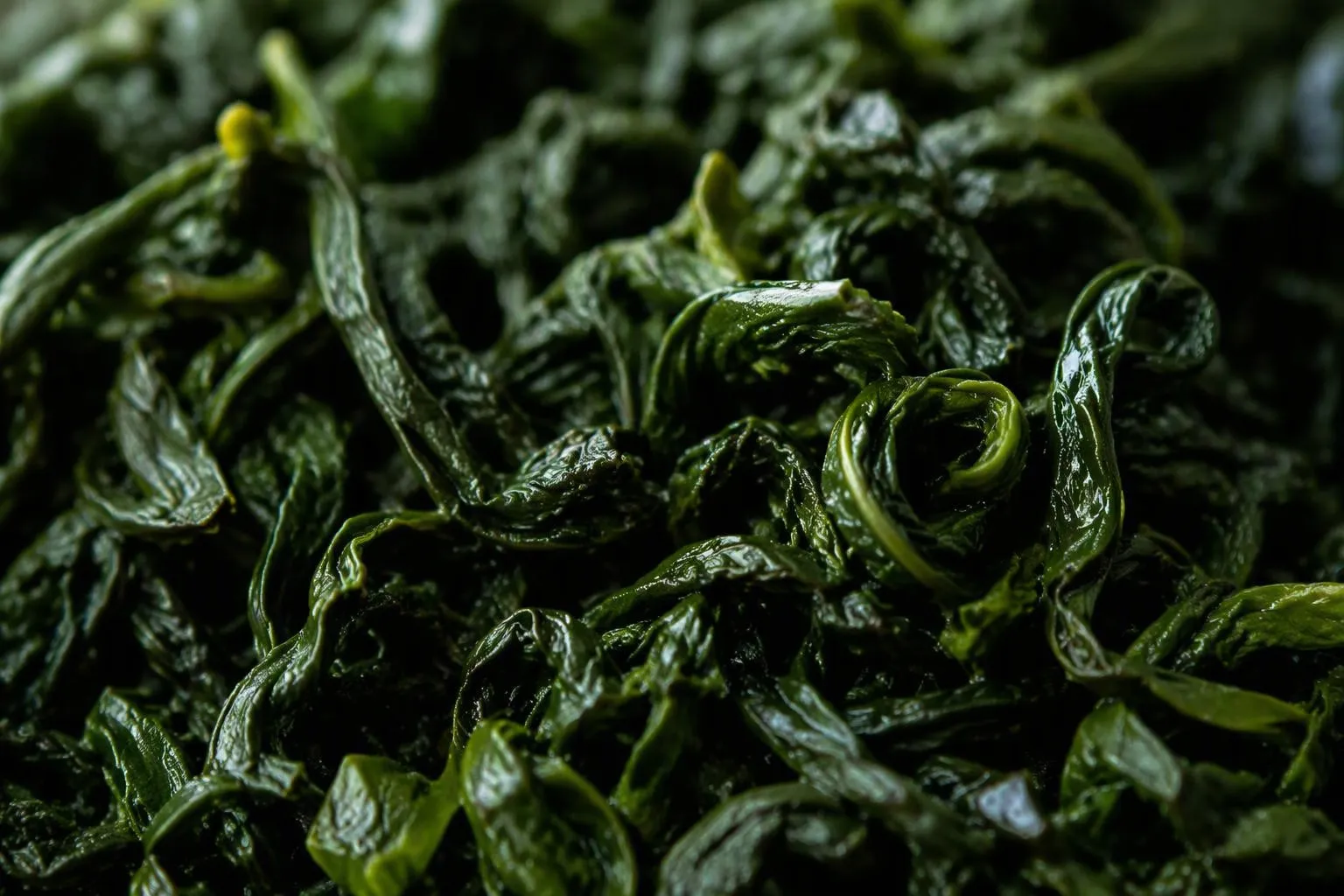
In the rolling stage the tea leaves are broken up using rollers. Oxygen reaches the cell sap that leaks out, and a shaker or sieving machine breaks up the clumps of wet leaves.
Tool
Rollers
Then
Shaker / sieve
Result
Sap meets oxygen
04 — Colour turns
Fermentation
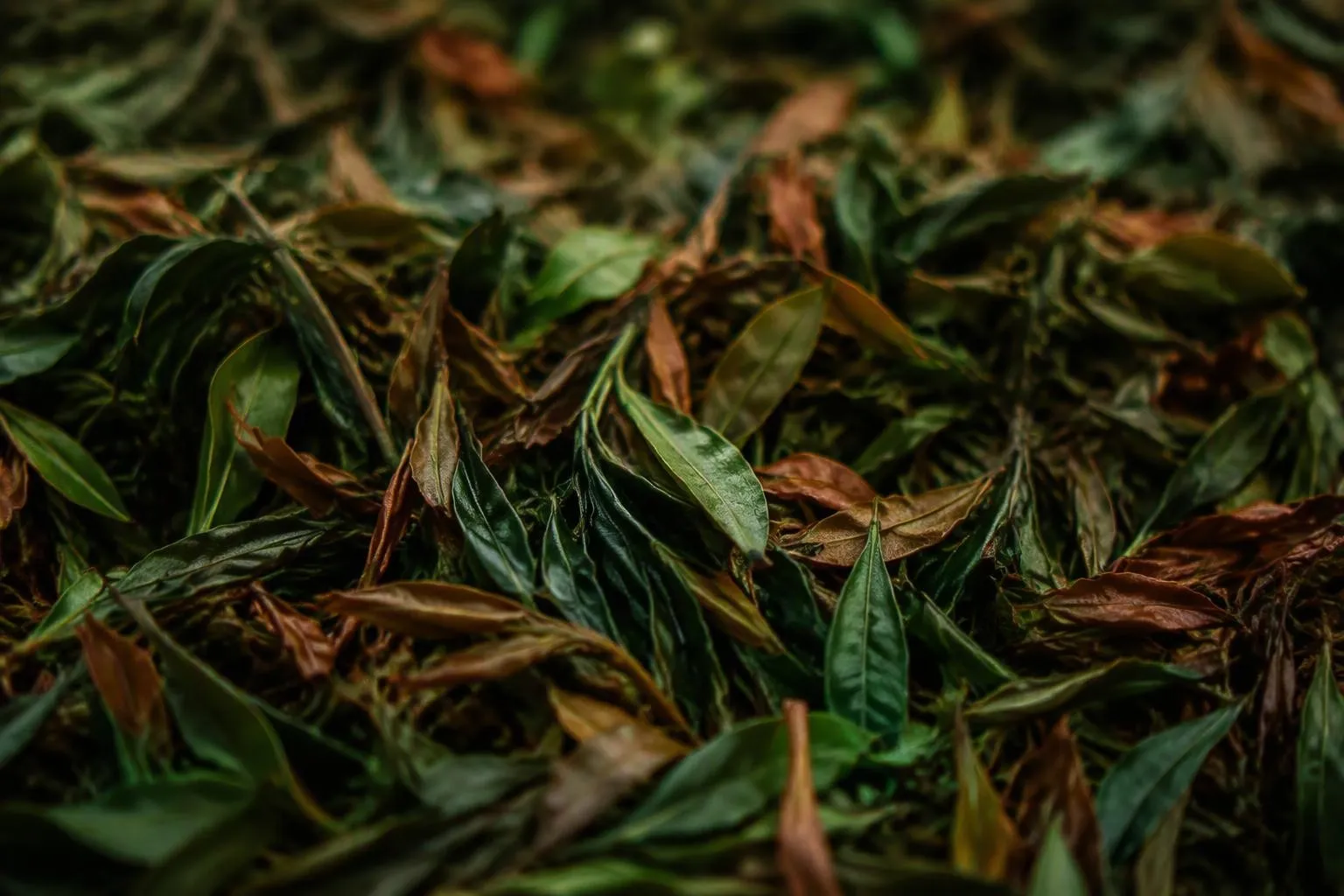
Green turns to copper.
The enzymes and other ingredients in the leaves react with oxygen. The tea changes colour and acquires its characteristic smell and flavour.
Reaction
Enzyme + oxygen
Colour
Green → copper
Gains
Smell and flavour
05 — 90 degrees
Drying
Hot air seals the black.
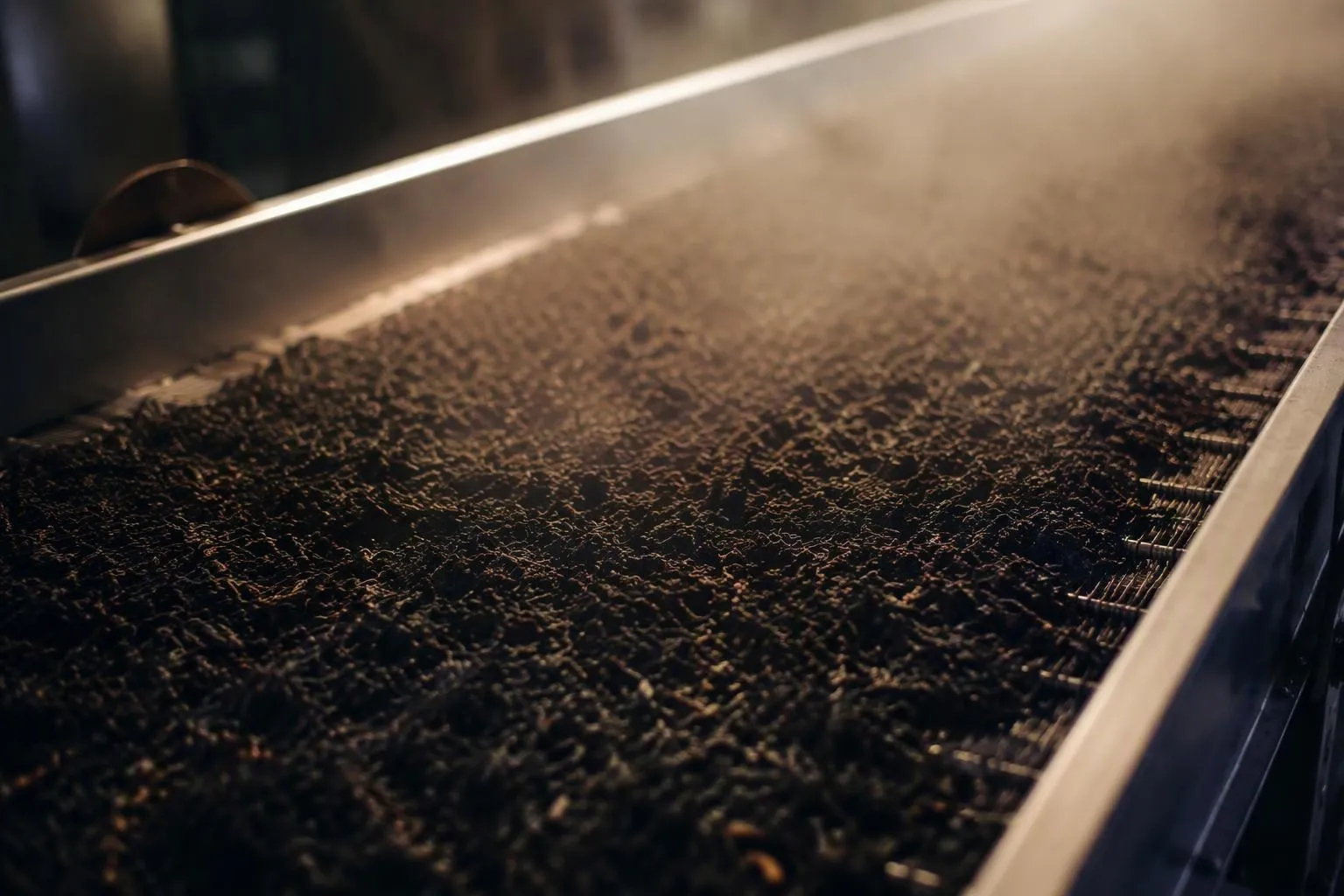
Drying follows on metal conveyor belts, where the leaves are blasted with hot air of up to 90 degrees Celsius — that is how tea gets its dark brown to black colour. It is then sieved and sorted into leaf tea and small-leaf tea, and sent on to packaging plants in Rize, Ankara and Istanbul.
Air
≤ 90 °C
Sorted
Leaf · small-leaf
Packed in
Rize · Ankara · Istanbul
06 — The teapot
Glass
Happiness in three steps.
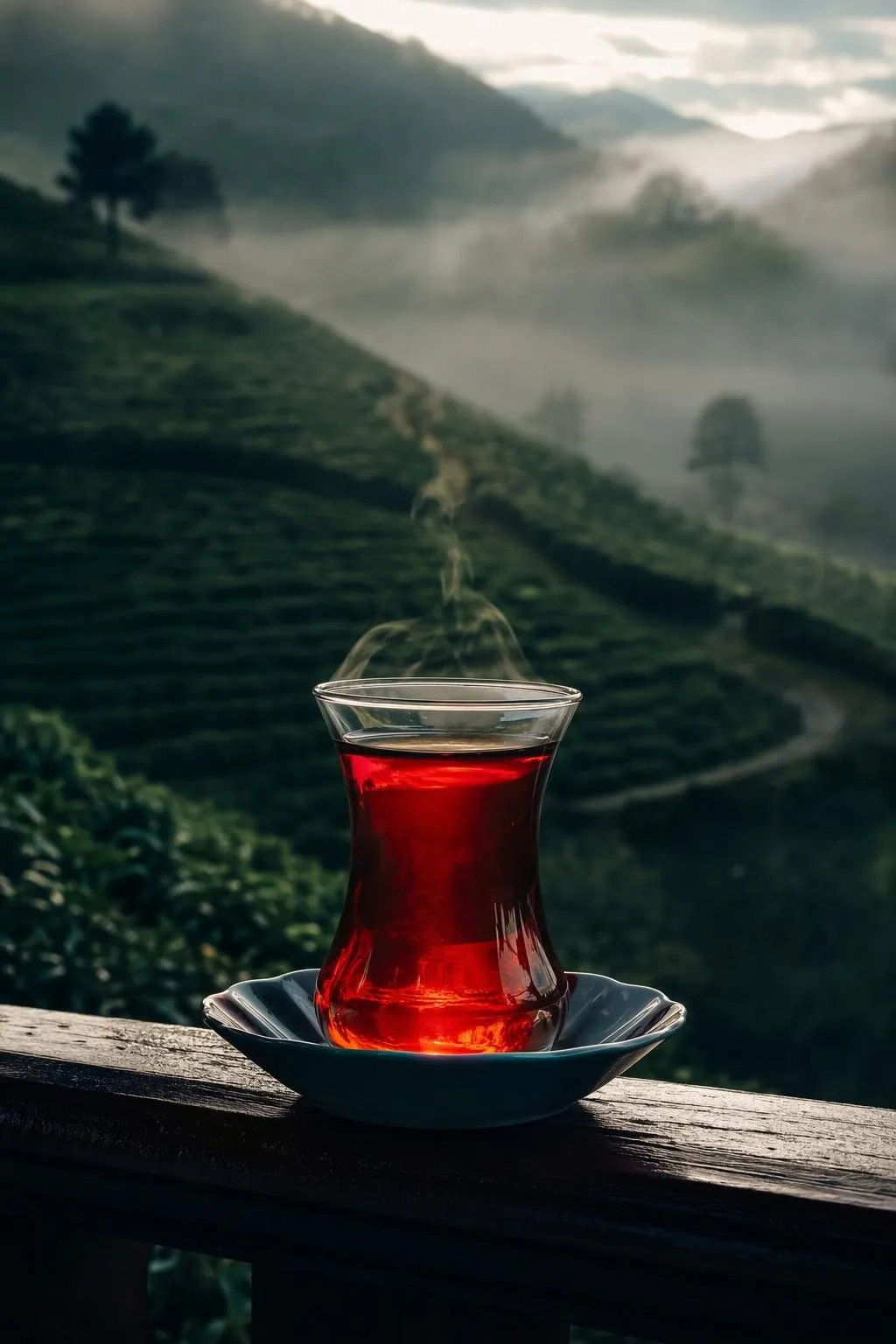
Turkish çay is prepared with two pots that fit together. The lower pot is filled with water and heated; the upper pot is filled with boiling water from it and set on the stove. The tea brews until the floating leaves have settled. When serving, pour the tea first and top up with hot water to suit your taste.
Pots
Two, stacked
Steps
3
Strength
To taste
LeafWiltingRollingFermentationDryingGlass
01 / 06
01 Leaf
02 Wilting
03 Rolling
04 Fermentation
05 Drying
06 Glass
Quality
Produced to Turkish food law and ISO 9001.
Production is carried out in accordance with Turkish food law and the TS EN ISO 9001:2000 quality management standard. Tea is transported to nine regional directorates, from where it enters national or international retail.