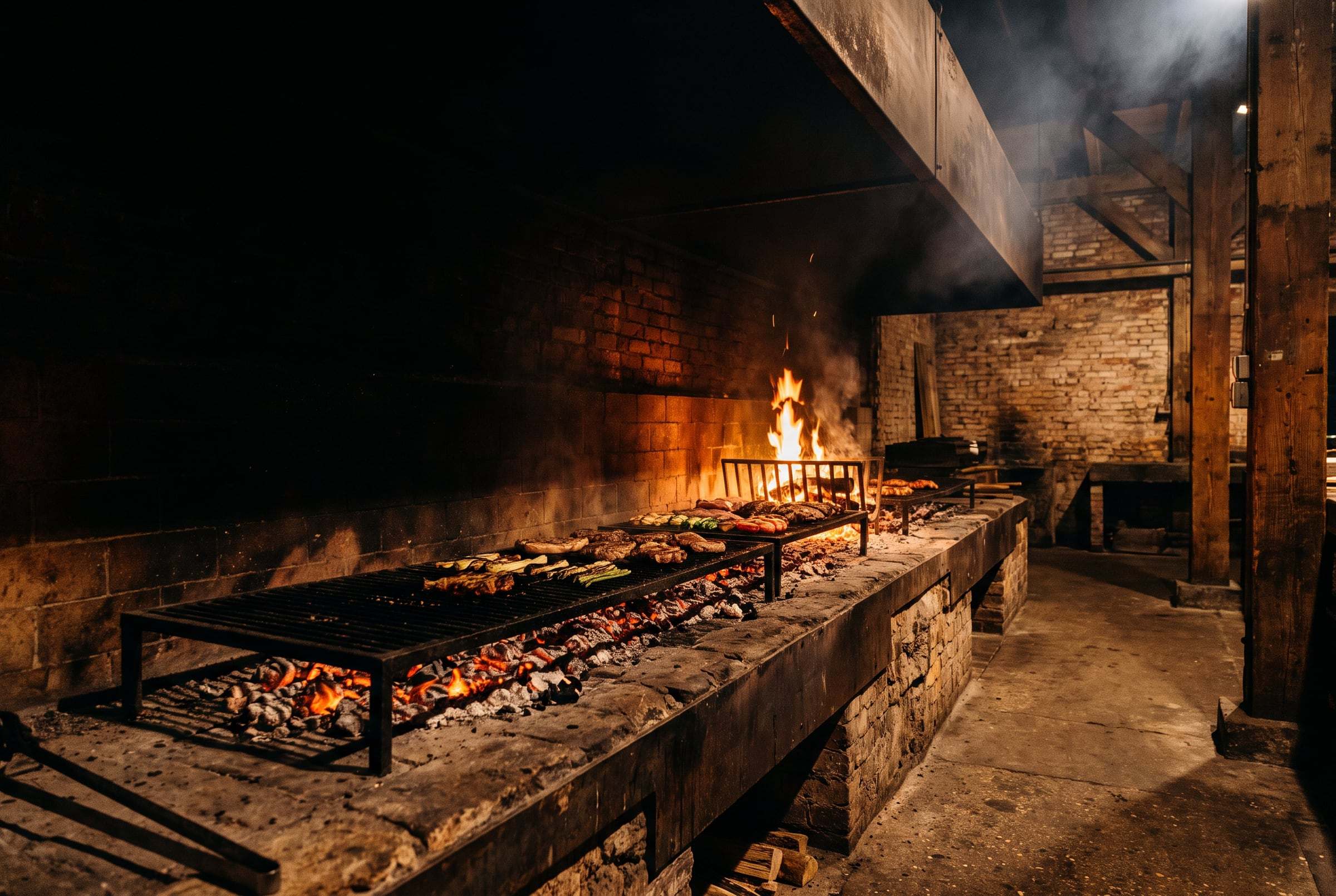
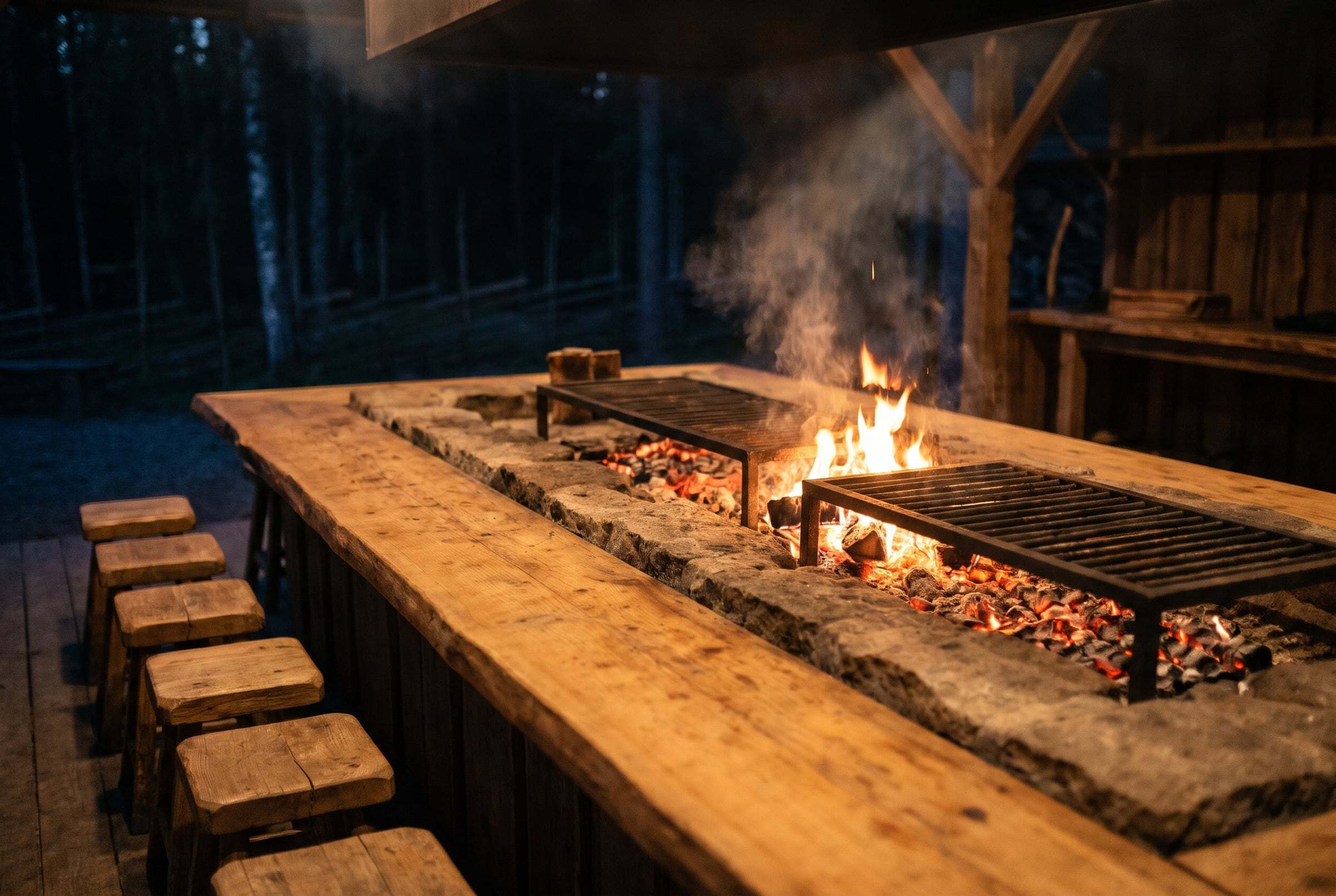
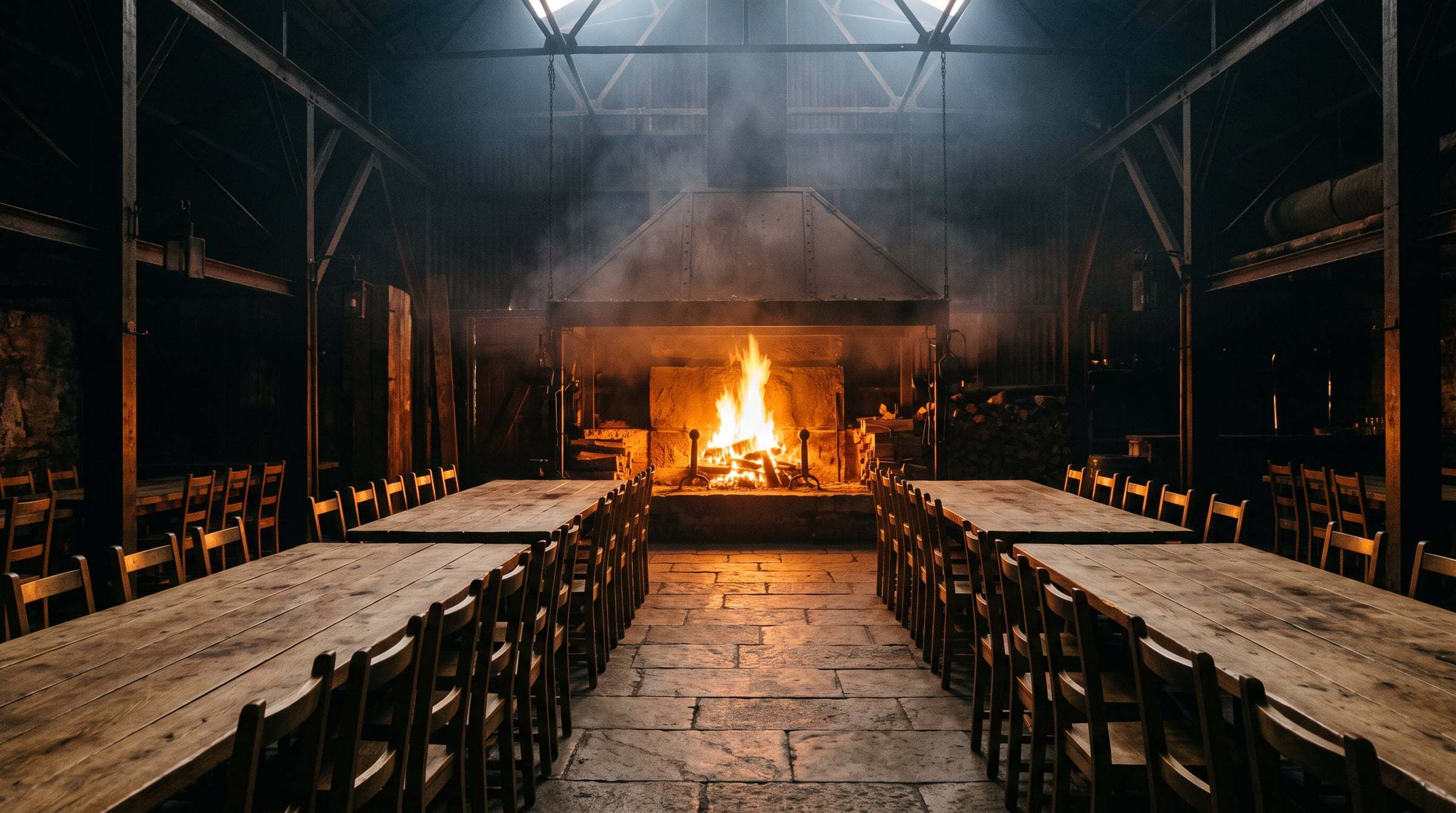
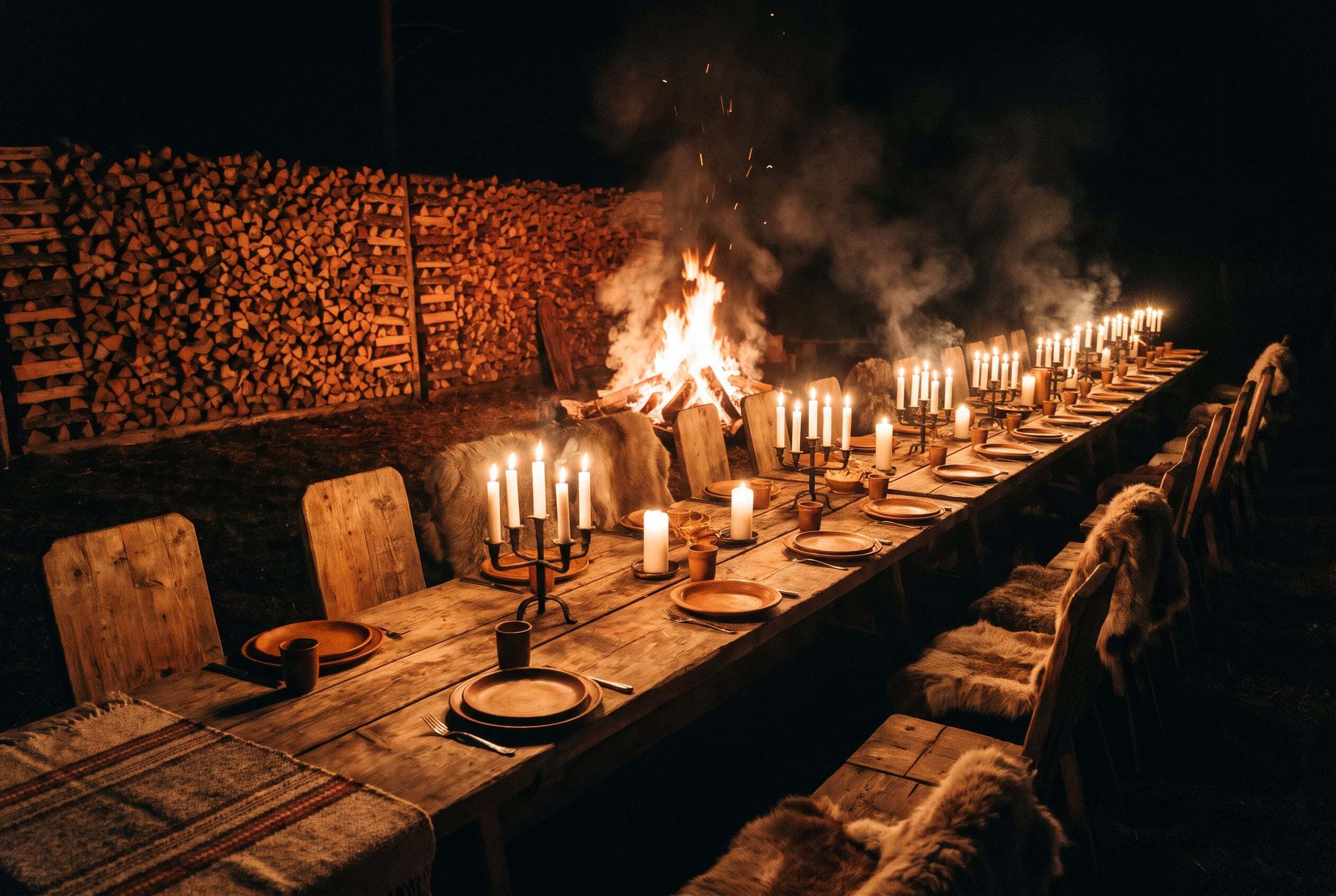
Ash is what the fire leaves, and where our menu begins. We cook only over birch, beech, oak and juniper, on one hearth, with no gas and no electric heat. When the flames die, the ash keeps cooking: it bakes, it salts, it cures. Nothing the fire leaves is wasted.
One fire, four states
Down to ash
180°
180°Smoke460°Ember720°Flame900°Ash
01 / 04
01 · Røg
Smoke
180°
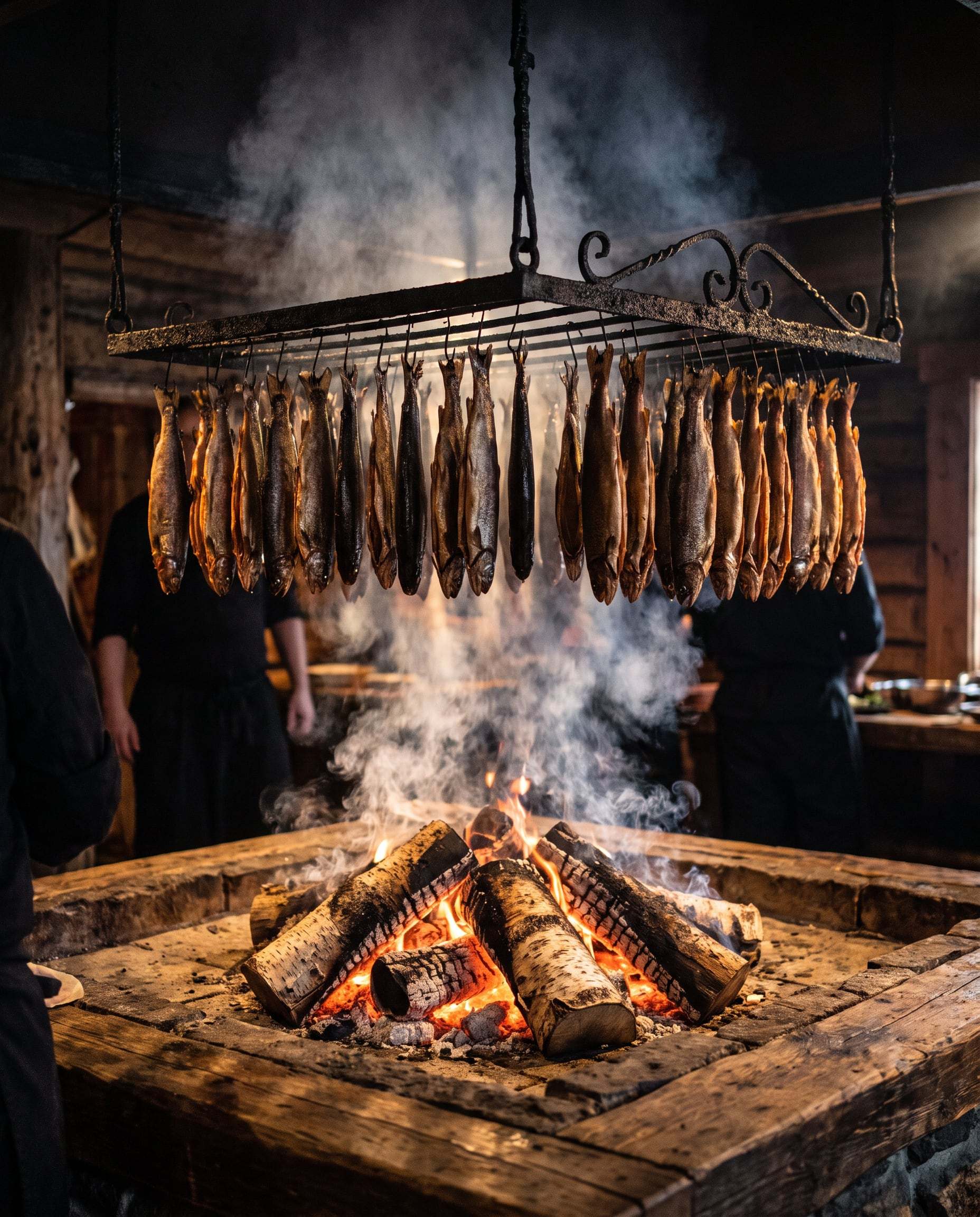
It starts quietly. Smouldering birch sends its smoke up to the high racks, where trout roe and potatoes take colour slowly at 180°. Around 180°.
Birch-smoked trout roe
Smoked potato
Smoked bone marrow
02 · Glød
Ember
460°
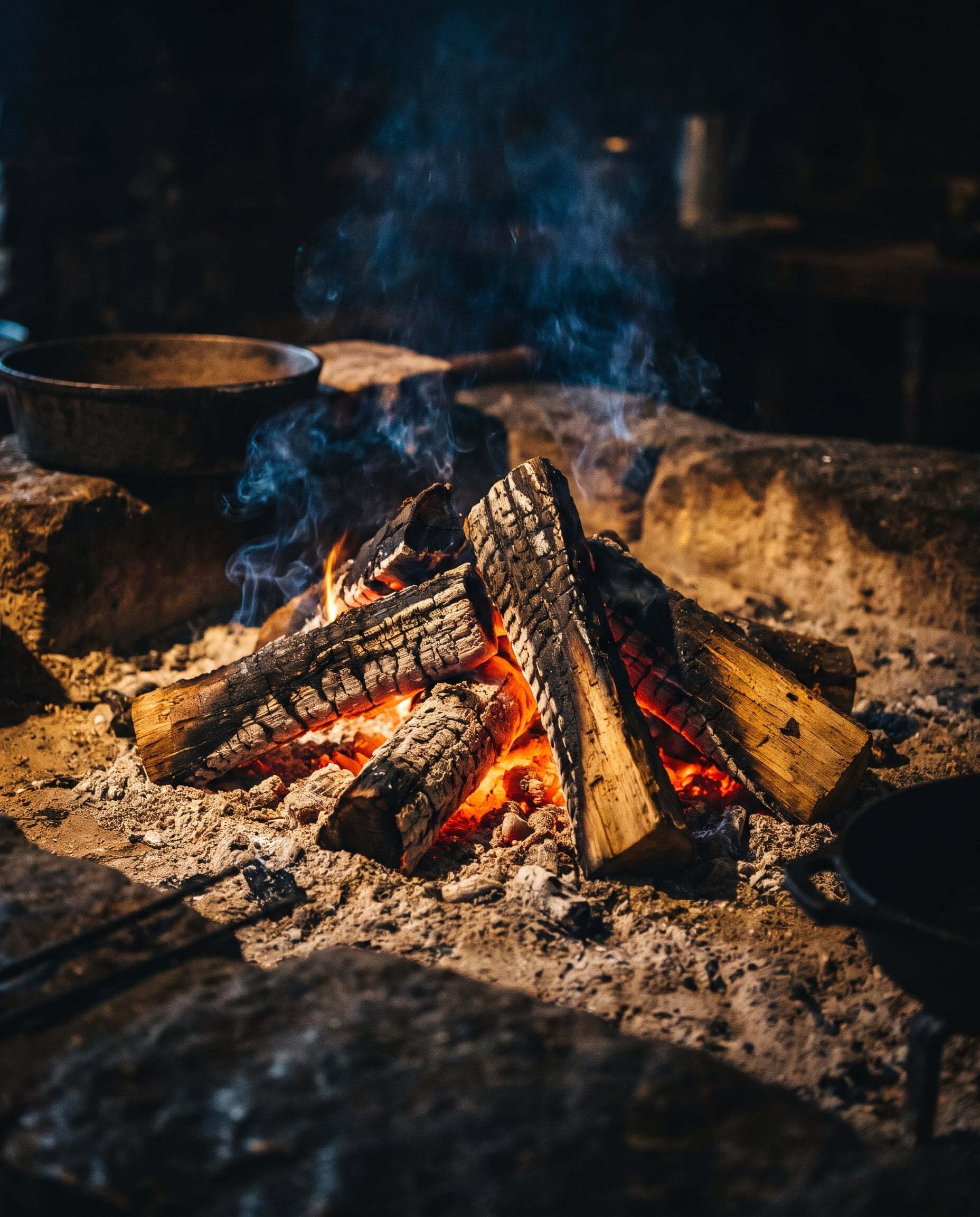
When the flames fall back, the coals glow evenly: the steadiest heat of the night. Celeriac and leeks go straight into them. Around 460°.
Coal-baked celeriac
Ember-roasted leek
Jerusalem artichoke
03 · Flamme
Flame
720°
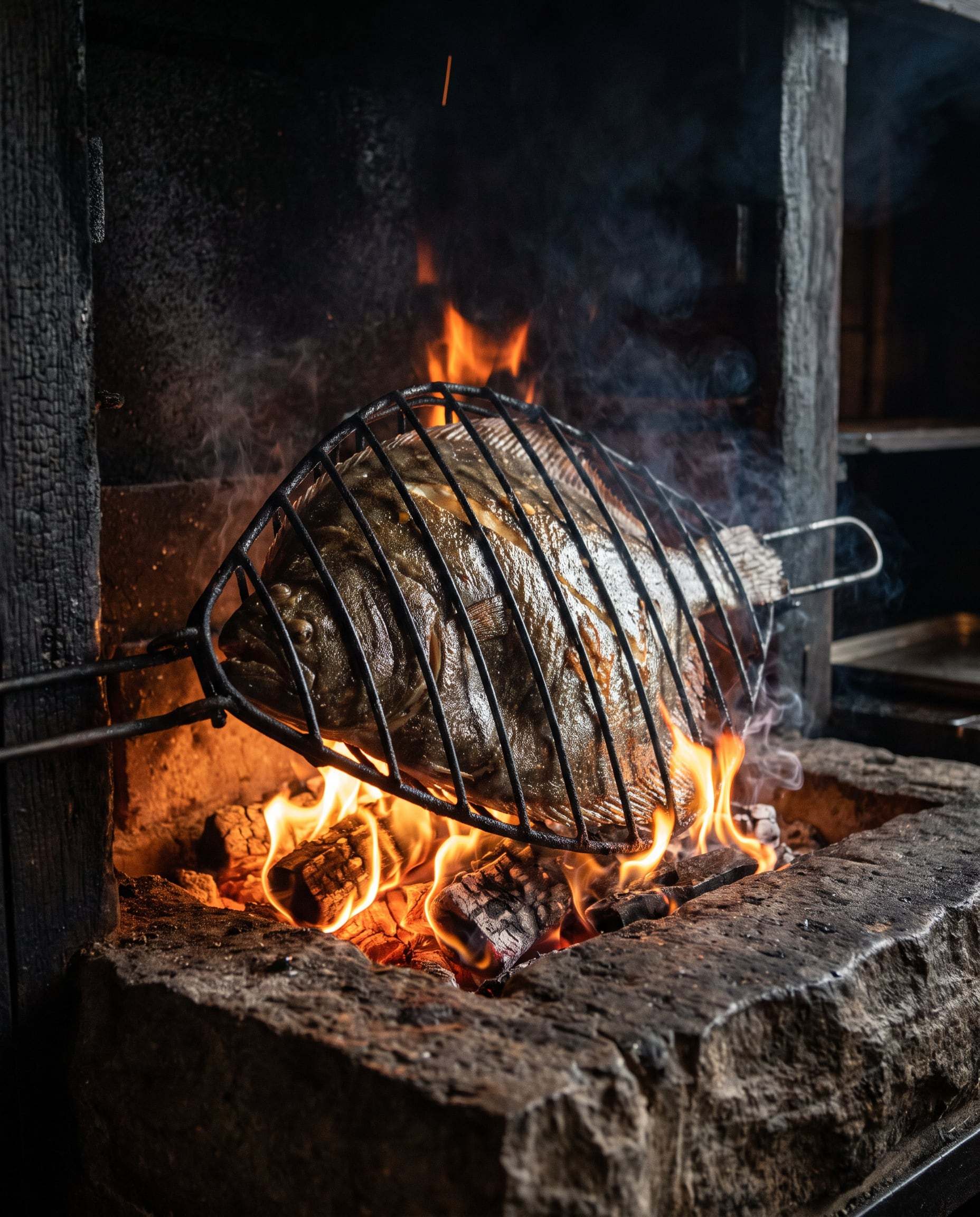
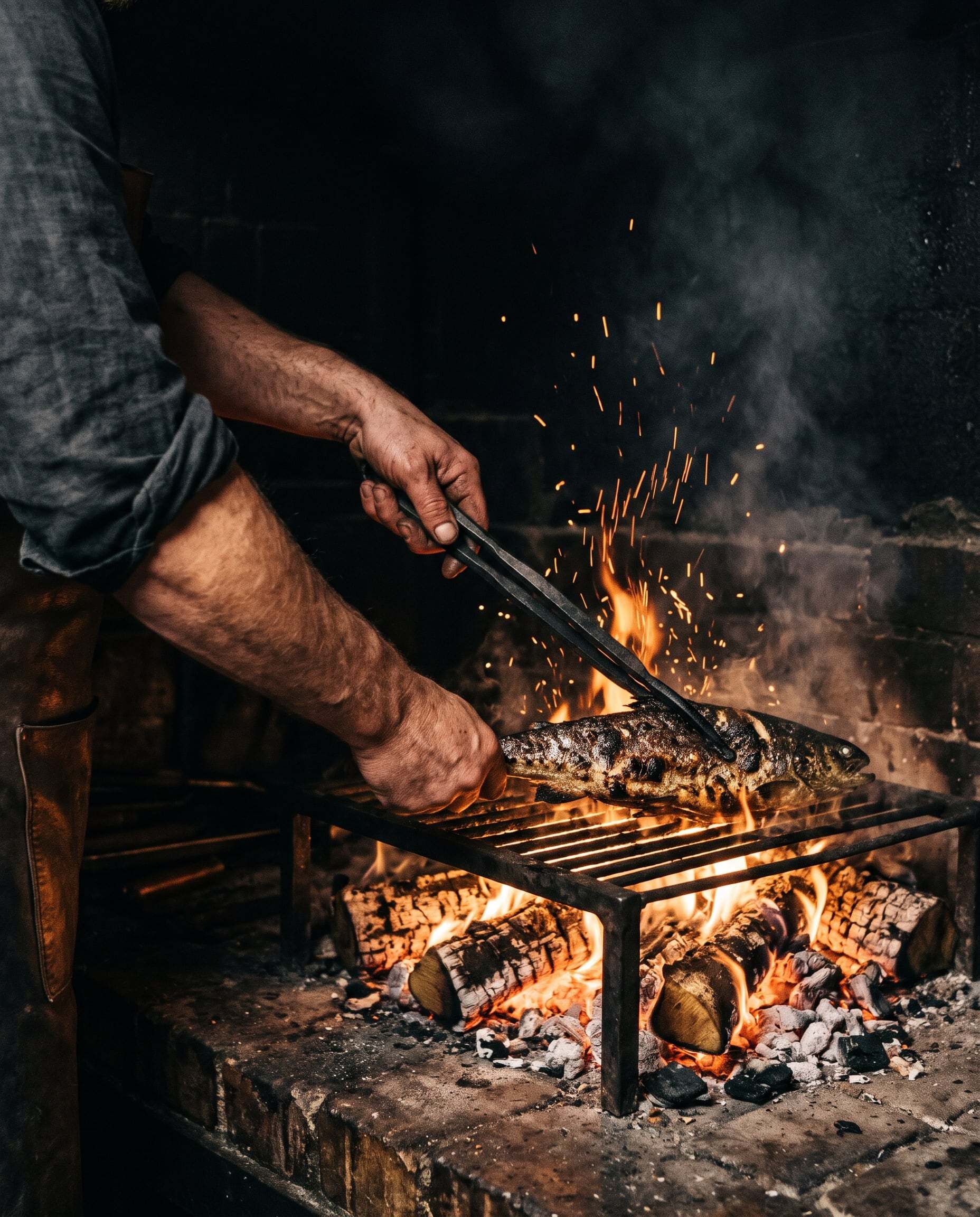
The loudest minutes. Langoustine and turbot meet open flame from oak and beech, and come off before it takes too much. Around 720°.
Læsø langoustine
Turbot on the bone
Aged Jersey beef
04 · Aske
Ash
900°
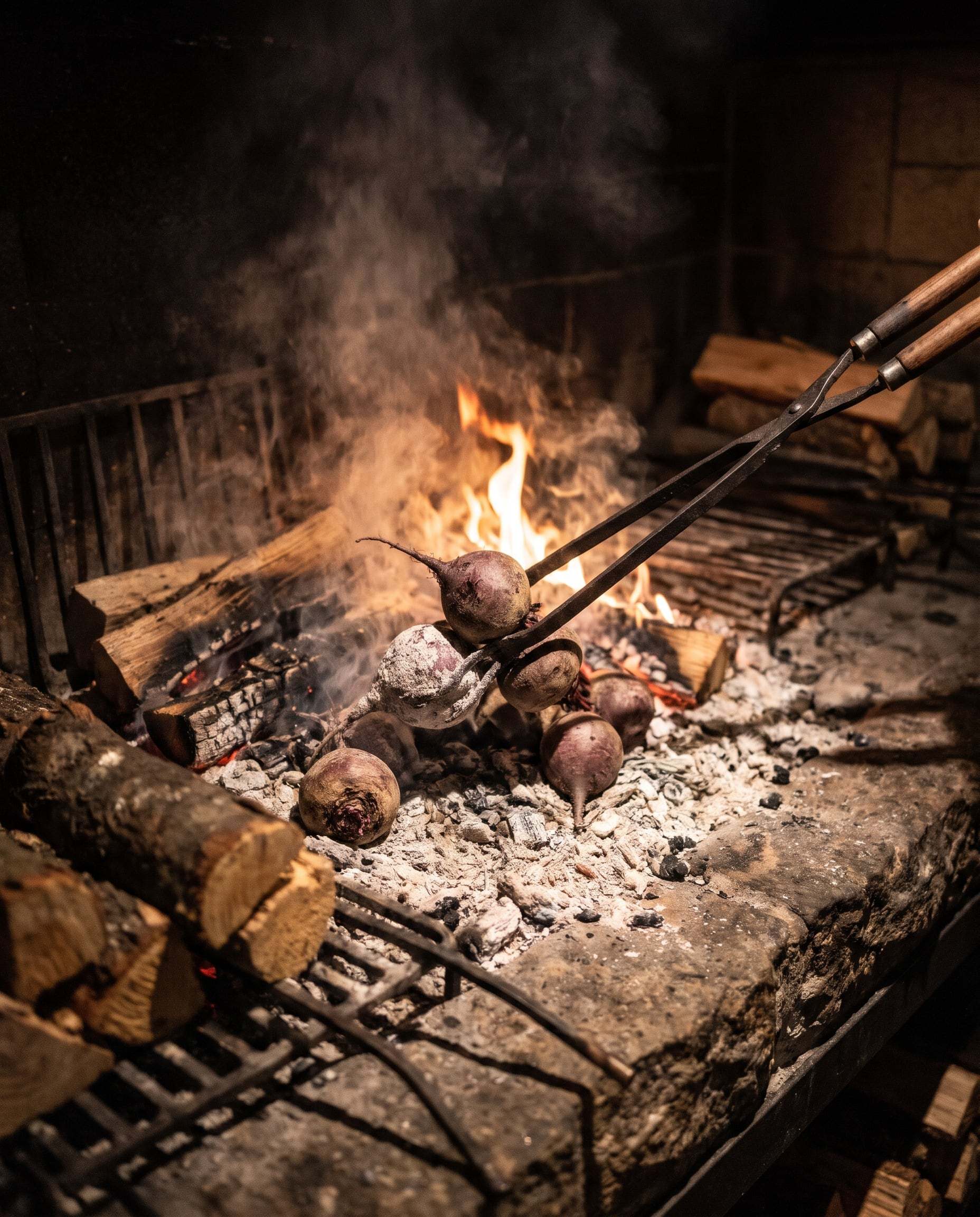
Our name, and the fire’s last word. Only the fiercest, cleanest burn turns wood white. That ash holds its heat until morning, the beetroot sleeps in it for twelve hours, and tomorrow’s menu starts here. Around 900°.
Ash-baked beetroot
Ash salt on every table
Ash-cured butter
Choose your wood
Four woods, four fires
Every dish is cooked over one of them, and each one leaves a different ash. Choose a wood to see how it burns, how hot it gets, what goes over it and what it leaves behind.
Heat over the first hour · Birch peaks near 720°
720°
Birch · Birk
Bright and quick. Sweet, papery smoke with a breath of wintergreen from the bark.
Burn
Fast, bright flame
Smoke
Sweet · papery · wintergreen
Peak
720°
Ash
Fine and pale. Sifted over the butter.
For bread, leeks, mushrooms and anything that wants a tall flame and a short visit.